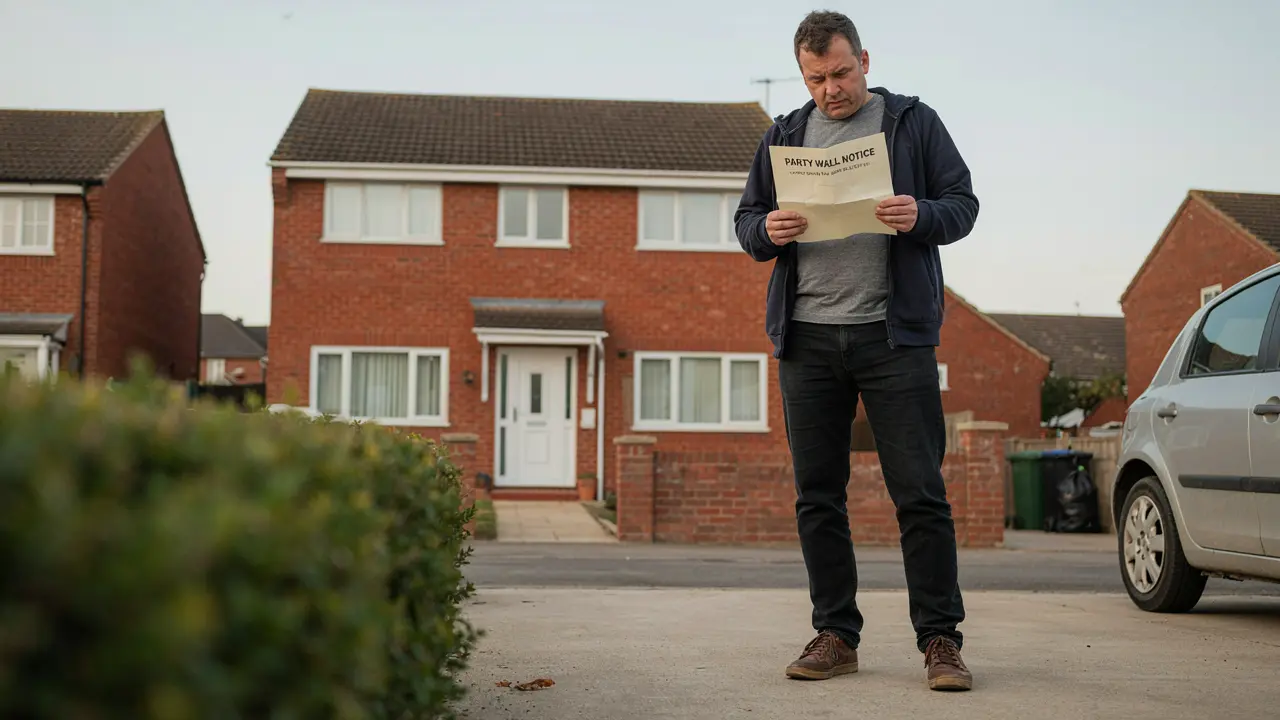
A party wall notice template can be a useful starting point for homeowners and developers preparing to carry out building work near neighbouring properties. However, choosing the correct template and completing it accurately are essential steps in managing the legal requirements of a construction project.
Under the Party Wall etc. Act 1996, certain works affecting shared walls, boundary walls and nearby foundations require formal notice to adjoining owners. Using a generic letter without checking which provisions apply may leave important details missing or create confusion about the work being proposed.
For property owners planning an extension, loft conversion, chimney breast removal or basement development, understanding how party wall notices work can help reduce uncertainty before contractors arrive on site.
What Is a Party Wall Notice Template?
A party wall notice template is a document that helps a building owner formally notify an adjoining owner about proposed work covered by the Party Wall etc. Act 1996.
It provides a structure for including the relevant property addresses, the nature of the proposed work, the intended start date and other information required by the applicable statutory provision.
The notice is not simply a courtesy letter to a neighbour. It forms part of a legal process that gives adjoining owners an opportunity to respond to the proposed work and, where a dispute arises, provides a framework for resolving relevant matters.
The UK Government publishes example letters and explanatory guidance for different types of party wall notices. These official examples are a useful starting point when identifying the correct document for a project.
Which Party Wall Notice Template Should You Use?
One of the most common mistakes is assuming that every building project can use the same notice. The appropriate document depends on the location and nature of the proposed work.
1. Party Structure Notice
A party structure notice may be required for certain work affecting an existing party wall or party structure. Examples can include cutting into a shared wall to insert beams, raising or repairing a party wall, or removing a chimney breast from a party wall.
Under Section 3 of the Act, the notice generally needs to be served at least two months before the proposed work begins.
2. Line of Junction Notice
A line of junction notice relates to certain proposals to build a new wall at the boundary between neighbouring properties.
The procedure differs depending on whether the proposed wall will be built astride the boundary or wholly on the building owner’s land. A wall astride the boundary requires the adjoining owner’s written consent, while a wall built wholly on the building owner’s land is subject to different statutory provisions.
The relevant notice period is generally one month, but the requirements and rights differ according to the circumstances.
3. Three-Metre or Six-Metre Notice
Section 6 of the Act covers certain excavations close to neighbouring buildings. Depending on the depth and location of the proposed excavation, notice may be required where the work falls within the statutory three-metre or six-metre tests.
This type of notice requires particular care because drawings showing the proposed excavation depth and the location of the relevant buildings must be provided. The notice must also address whether the adjoining building’s foundations will be underpinned, strengthened or otherwise safeguarded.
A standard party structure notice should not be used as a substitute for the excavation notice where Section 6 applies.
What Information Should a Party Wall Notice Include?
Although the required details vary according to the type of notice, the document should clearly identify the parties, the affected properties and the work being proposed.
Key information may include:
- The building owner’s full name and correspondence address.
- The adjoining owner’s name and address, where known.
- The address of the property where the building work will take place.
- A clear description of the proposed work.
- The relevant provision of the Party Wall etc. Act 1996.
- The intended start date, allowing for the applicable notice period.
- Relevant plans, drawings or technical information where required.
- The building owner’s signature and the date of the notice.
A vague description such as “renovation works” may not adequately explain what is planned. Where structural work is involved, the description should be sufficiently detailed to identify the proposed operations affecting the party structure or neighbouring property.
The Government’s explanatory booklet provides examples and further instructions on completing different types of notices.
A Basic Party Wall Notice Template
The following is a simplified starting point for a party structure notice. It is not a universal template for every type of party wall work.
The Party Wall etc. Act 1996 — Notice of Proposed Works Under Section 3
Date: [Insert date]
To: [Name of adjoining owner]
Address: [Adjoining owner’s correspondence address]
Property affected: [Address of adjoining property]
Dear [Name of adjoining owner],
I/we, [full name or names of building owner], of [building owner’s correspondence address], am/are the owner(s) of [address of property where the proposed work will take place].
I/we hereby give notice under Section 3 of the Party Wall etc. Act 1996 of my/our intention to carry out the following work affecting the party structure adjoining your property:
Description of proposed work: [Provide a clear and detailed description of the work, including relevant structural operations.]
Proposed start date: [Insert date that allows for the applicable statutory notice period.]
Supporting documents: [List any relevant drawings or technical information enclosed, including any documents specifically required by the Act.]
This notice is served in accordance with the Party Wall etc. Act 1996. Further information about the Act and the procedure for responding to this notice is available in the UK Government’s explanatory booklet on party walls.
Yours sincerely,
[Signature of building owner]
[Printed name of building owner]
[Contact details]
Important: This example is intended only as a basic drafting aid for a party structure notice. It must be adapted to the actual work and checked against the statutory requirements. For a new wall at a boundary or qualifying excavation, the appropriate notice and supporting information will differ.
How to Serve a Party Wall Notice Correctly
Preparing the letter is only one part of the process. The building owner must also consider who should receive the notice, how it should be served and when the relevant period expires.
Identify the Correct Adjoining Owners
The notice must be served on the relevant adjoining owner or owners. Depending on the ownership arrangements, there may be more than one person entitled to receive notice.
If the neighbouring property is rented out, the landlord may be an adjoining owner for the purposes of the Act. Where ownership details are uncertain, further checks may be necessary before serving the notice.
Allow the Correct Notice Period
The statutory period depends on the type of work. Party structure notices generally require two months, while certain line of junction and excavation notices generally require one month.
The notice should be served early enough for the relevant period to expire before the intended start date. An earlier start may be possible where the necessary written agreement is obtained, but owners should not assume that serving a notice automatically authorises immediate construction.
Use an Appropriate Method of Service
The Government’s guidance explains that notices may be delivered personally or sent by post. Electronic service may be possible where the statutory requirements for agreement to electronic communication are met.
Keep a copy of the notice and appropriate evidence of service. This can help establish what was sent and when if the timing or validity of the notice is later disputed.
Understand the Neighbour’s Response
An adjoining owner may consent or dissent, depending on the applicable procedure. Where the owner does not respond within the relevant period, a dispute may be deemed to have arisen under the Act.
Where a dispute arises, the statutory surveyor procedure can be used to resolve relevant matters. The process may involve an agreed surveyor or separate surveyors appointed by the respective owners.
Common Mistakes to Avoid When Using a Party Wall Notice Template
A template can save time, but copying a document without checking the circumstances can create problems.
Using the Wrong Type of Notice
A notice for work on an existing party wall is not interchangeable with a notice for a new wall at the boundary or excavation near neighbouring foundations. Identify the applicable statutory provision before preparing the document.
Describing the Work Too Broadly
A notice should explain the proposed operations clearly enough for the adjoining owner to understand what is planned. Include relevant structural details and drawings where appropriate or legally required.
Giving Insufficient Notice
Starting work before the required notice period expires, without the necessary written agreement, can create legal and practical complications.
Assuming Planning Permission Is Enough
Planning permission and party wall procedures address different legal requirements. Approval from the local planning authority does not remove the obligation to serve a valid party wall notice where the Act applies.
Failing to Keep Records
Retain copies of notices, supporting plans, responses and relevant correspondence. A clear record can help resolve later questions about the proposed work and the steps taken before construction.
When Should You Appoint a Party Wall Surveyor?
Professional assistance may be particularly valuable where a project involves complicated structural alterations, basement excavation, multiple adjoining owners or a neighbour who has raised concerns about the proposed work.
A party wall surveyor can help establish the correct procedure, review the information provided and administer the statutory process where required. Where a dispute arises, the surveyor or surveyors may deal with relevant matters and prepare a party wall award.
Early advice is often more practical than attempting to resolve notice problems after the construction programme has already been arranged.
How Charrette Law Can Help With Your Property Project
Party wall requirements should be considered alongside the wider planning and legal issues affecting a property development. This is particularly important where an extension, conversion or redevelopment also requires planning permission, building regulations approval or other technical assessments.
Charrette Law supports property owners and developers with planning-related matters and can help identify the considerations that may affect a proposed project. Where a party wall notice or surveyor appointment is needed, obtaining advice from a suitably qualified specialist can help ensure the correct procedure is followed.
Contact Charrette Law to discuss the planning considerations affecting your property project and determine what specialist support may be appropriate.
Frequently Asked Questions
Can I download a free party wall notice template?
Yes. The UK Government publishes example party wall notices and explanatory guidance through its official website. These examples cover different types of work, including party structure notices, new walls at boundaries and qualifying excavations.
Is a party wall notice template legally valid?
A template can form the basis of a valid notice, but it must be completed accurately and satisfy the requirements that apply to the proposed work. A generic letter may be unsuitable if it omits required information or uses the wrong statutory procedure.
How long before building work should a party wall notice be served?
A party structure notice generally requires at least two months’ notice. Certain notices relating to new walls at boundaries and qualifying excavations generally require at least one month. The exact requirements depend on the proposed work and relevant statutory provisions.
Can I serve a party wall notice myself?
A building owner can serve a notice without necessarily appointing a surveyor to do so. However, the owner remains responsible for complying with the applicable requirements. Specialist advice can be helpful where the work is complex or there is uncertainty about the correct notice.
What happens if my neighbour does not reply to the notice?
If an adjoining owner does not respond within the applicable statutory period, a dispute may be deemed to have arisen. The surveyor appointment and dispute-resolution procedure under the Act may then apply.
Does a party wall notice give me permission to build?
No. A party wall notice is part of the statutory process governing certain work affecting party walls, boundaries and neighbouring buildings. It does not replace planning permission, building regulations approval or any other consent required for the project.
Does the Party Wall etc. Act 1996 apply across the UK?
The Act applies in England and Wales. Different legal arrangements apply in Scotland and Northern Ireland, so the relevant rules should be checked for properties in those jurisdictions.
Conclusion
A party wall notice template is a useful starting point, but the correct document depends on the work being proposed and the statutory requirements that apply.
By identifying the appropriate notice, providing an accurate description of the works, allowing sufficient time and keeping proper records, property owners can reduce the risk of avoidable complications before construction begins.
For more complex projects, seeking professional advice at an early stage can help clarify the correct procedure and ensure that party wall matters are coordinated with the wider development plan.
Contact Charrette Law to discuss the planning considerations relevant to your property project and the steps you may need to take before work begins.