By Charrette Law Firm Editorial Team · Updated 2026-07-20
For Oversailing Licenses Requirements, property developers require an oversailing license whenever a crane jib, scaffolding. Other construction equipment swings or extends over neighboring land, airspace, or third-party property. This legal permit is addressed in detail in our guide on Development Agreements Explained for Property Developers. Without one, developers risk legal disputes that delay projects and increase costs significantly. Charrette Law Firm advises on securing these authorisations efficiently.
Key Takeaways
- Crane oversail licenses authorize equipment jibs to extend over neighboring land and public highways legally.
- Tower cranes, scaffolding, and building parts requiring oversail permits must obtain formal legal authorization beforehand.
- Developers operating cranes in densely populated urban areas face complex legal frameworks governing oversailing activities.
- Construction projects involving equipment extending beyond site boundaries require explicit permits from relevant authorities.
What Are the Prerequisites for Obtaining an Oversailing License?
Oversailing Licenses Requirements begin with a fundamental threshold: any crane, scaffolding, or construction apparatus that crosses the boundary of neighboring property or a public highway triggers a legal obligation to secure formal authorisation. Failing to obtain this authorisation exposes developers to injunctions, project delays, and potential liability claims that can halt construction entirely.
When Does an Oversailing License Become Necessary?
An oversailing license is required whenever a crane’s jib or loaded arm swings across a neighboring property boundary during construction operations. cite-1 The requirement extends beyond cranes — scaffolding, other construction equipment. Even structural elements of the building itself create the same legal obligation if they project over adjacent land or public highways. cite-2
Why Is Oversailing Practically Unavoidable on Urban Sites?
Tower cranes are the preferred method on constrained urban sites because they deliver significant height. Lifting capacity while occupying a modest footprint. Structural stability demands that a crane’s jib swing freely in the wind, making oversailing of adjacent land a near-certain outcome on dense city developments.
Before applying for a license, developers must confirm the following prerequisites are in place:
- Identify all affected neighboring landowners whose airspace the crane or equipment will enter.
- Confirm the scope of oversailing — document which equipment, including scaffolding and structural elements, crosses the boundary.
- Engage a specialist legal adviser experienced in property and construction law to draft or review the license terms.
- Obtain the landowner’s consent through a formal written agreement before crane operations commence.
How Do Developers Apply for an Oversailing License Step by Step?
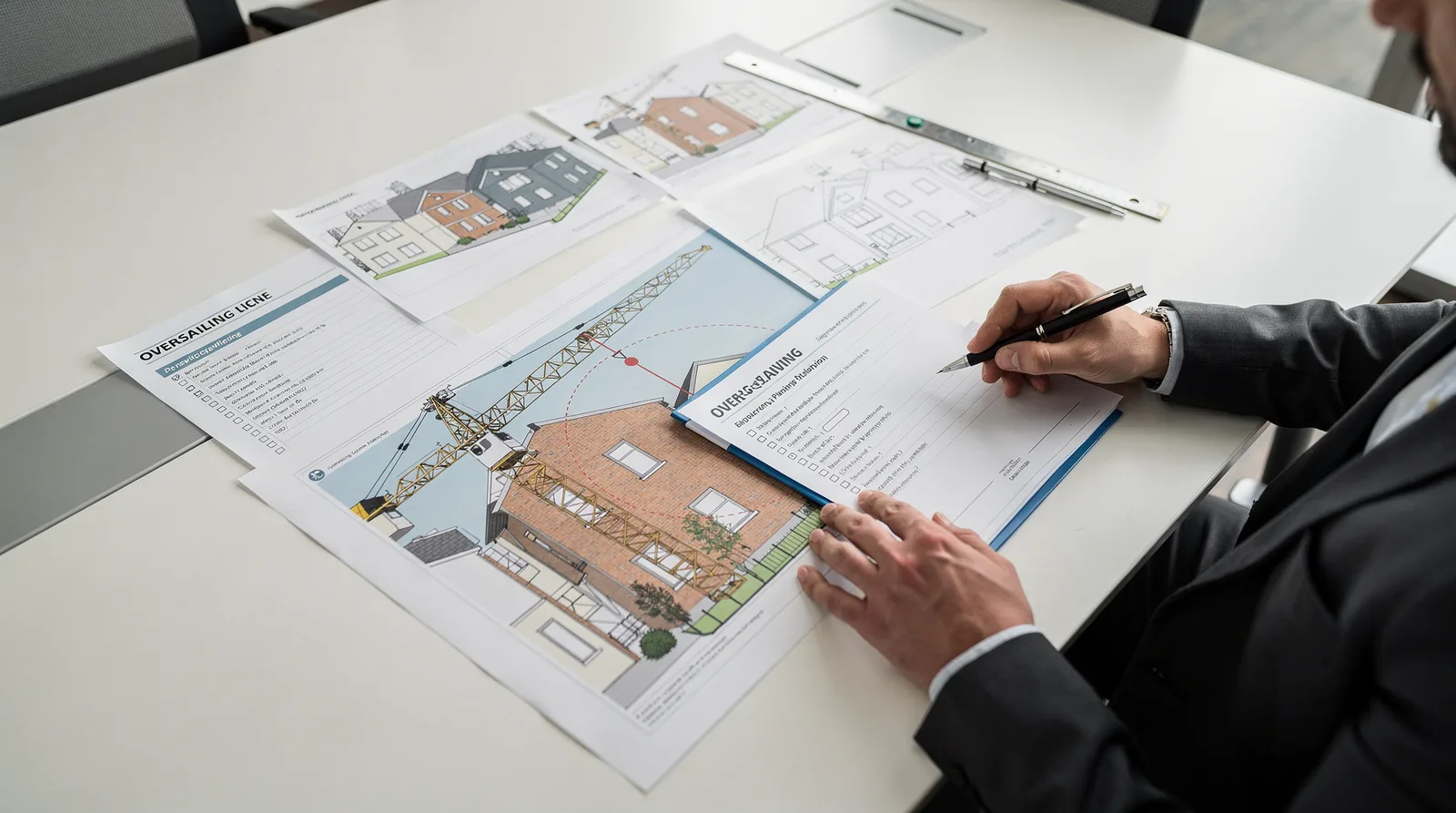
Applying for an oversailing license requires developers to identify every affected neighboring landowner, engage legal counsel early. Coordinate the process alongside the broader development approval timeline. Delays in any single step can stall an entire construction programme. Meeting Oversailing Licenses Requirements demands structured preparation from the outset.
Prerequisites Before Starting the Application
Developers must confirm that planning permission for the commercial development aligns with local and national policies before pursuing oversailing arrangements. Oversailing consent operates alongside — not independently of — the wider development approval process. Attempting to secure an oversailing license without confirmed planning status introduces unnecessary risk.
Step-by-step application process:
- Identify all affected airspace owners. Map every parcel of third-party land, airspace, or property that the crane jib or other equipment will pass over during construction.
- Engage specialist legal counsel immediately. Early expert legal assistance places developers on the strongest possible footing and prevents complications that become significantly harder to resolve once construction is underway.
- Account for timelines and costs at the project planning stage. The application process carries associated costs and lead times that must be built into the project programme before construction commences.
- Negotiate and execute license agreements with each affected party. Every landowner whose airspace is oversailed must individually grant consent, as no single agreement covers multiple third-party interests.
- Coordinate completion of all licenses before crane mobilisation. Construction cannot lawfully commence oversailing activity until all parties’ rights are formally protected through executed agreements.
What Happens If a Neighboring Landowner Refuses Consent?
A refusal by any single affected landowner can block crane operations entirely over that parcel of airspace. Developers facing refusal should instruct specialist solicitors to explore negotiated solutions or alternative construction methodologies before the programme is compromised.

What Should Developers Do If an Oversailing Application Is Refused?
A refused oversailing licenses requirements application does not end a construction project. Developers retain access to formal appeal processes and alternative arrangements. Engaging specialist solicitors at this stage is the most effective course of action.
Developers who build vertically on comparatively small land parcels face particularly acute legal challenges when construction equipment must extend beyond site boundaries. cite-3 A refusal compounds those challenges significantly.
What Steps Should Developers Take After a Refusal?
- Instruct a specialist solicitor with direct experience in oversailing and construction law.
- Review the grounds for refusal to identify whether procedural errors or substantive objections drove the decision.
- Initiate the formal appeal process within any applicable deadlines.
- Explore alternative arrangements, such as modified crane positioning or revised construction sequencing.
- Address neighboring concerns proactively, including airspace encroachment and loss of natural daylight to adjacent properties, as discussed in our resource on How to Obtain Building Licenses.
Can Neighboring Property Concerns Affect an Oversailing Negotiation?
Loss of light and airspace encroachment are interconnected concerns for neighboring property owners. cite-4 A neighboring development that reduces natural daylight received by an adjacent property can generate formal objections that complicate or block oversailing agreements. Developers must address both dimensions during negotiation to reach a durable resolution.
FAQ
When is an oversailing license required?
An oversailing license is required whenever a crane jib, scaffolding. Other construction equipment crosses the boundary of neighboring property or a public highway.
What happens if a developer operates without an oversailing license?
Developers without authorisation face injunctions, project delays, and potential liability claims that halt construction entirely.
What must developers do before crane operations commence?
Developers identify all affected neighboring landowners, document the full scope of oversailing, engage a specialist legal adviser. Obtain formal written consent from each landowner.