Development Agreements Explained
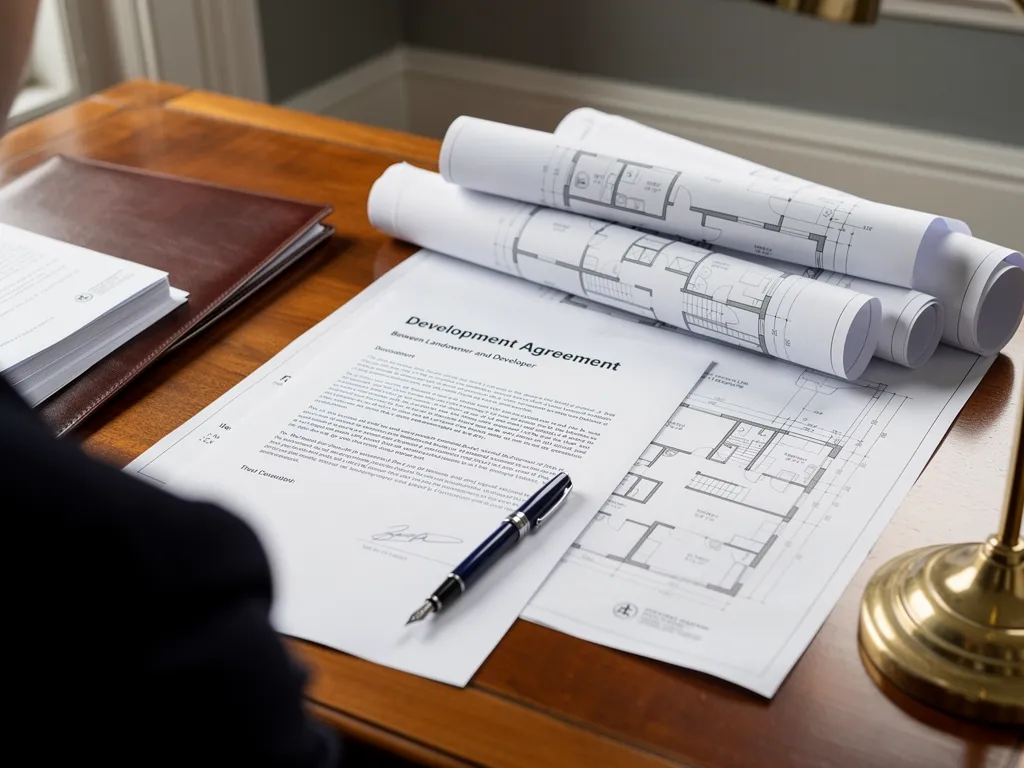
Development agreements are critical instruments in the UK property and construction sectors, establishing a formal framework for collaboration between landowners, developers, funders, and other stakeholders. These legally binding contracts define the rights, obligations, and responsibilities of each party involved in the development and delivery of a property project, whether residential, commercial, or mixed-use.
Understanding the intricacies of development agreements is essential for anyone engaged in land or property transactions. Errors or ambiguities in these agreements can have significant legal and financial consequences, making specialist legal advice indispensable at every stage.
What Is a Development Agreement?
A development agreement is a contract entered into between two or more parties — typically a landowner and a developer — that governs the terms under which a piece of land will be developed. The agreement sets out the precise obligations of each party, the programme for carrying out the development, the financial arrangements, and the mechanisms for resolving disputes.
Development agreements may also involve local planning authorities, where the agreement forms part of the broader planning consent framework. In such cases, the agreement must be carefully drafted to align with any conditions or obligations imposed under planning permission, including any Section 106 obligations.
Key Types of Development Agreement
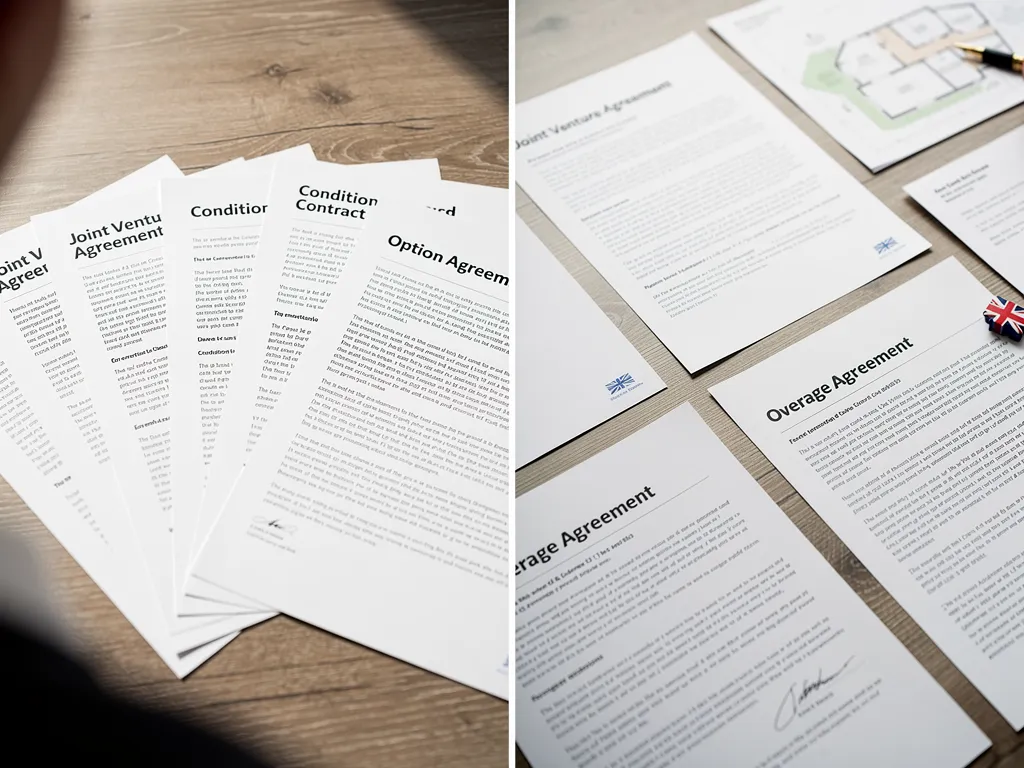
There are several principal forms of development agreement encountered in practice in England and Wales:
Development Management Agreements These appoint a developer to manage and oversee the delivery of a project on behalf of the landowner. The landowner retains ownership of the land, while the developer takes responsibility for obtaining planning permission, procuring contractors, and managing the construction process.
Joint Venture Agreements Where two or more parties combine resources to develop a site together, a joint venture agreement governs the respective contributions, profit-sharing arrangements, decision-making processes, and exit provisions.
Conditional Contracts and Options A conditional contract obliges a party to proceed with a purchase or development once a specified condition — typically the grant of planning permission — is satisfied. An option agreement grants one party the right, but not the obligation, to purchase or develop land within a defined period.
Overage Agreements Also referred to as clawback provisions, overage agreements entitle the original landowner to receive additional payments if the developer achieves a value or profit exceeding an agreed threshold, often triggered by the grant of planning permission or the sale of completed units.
Essential Components of a Development Agreement
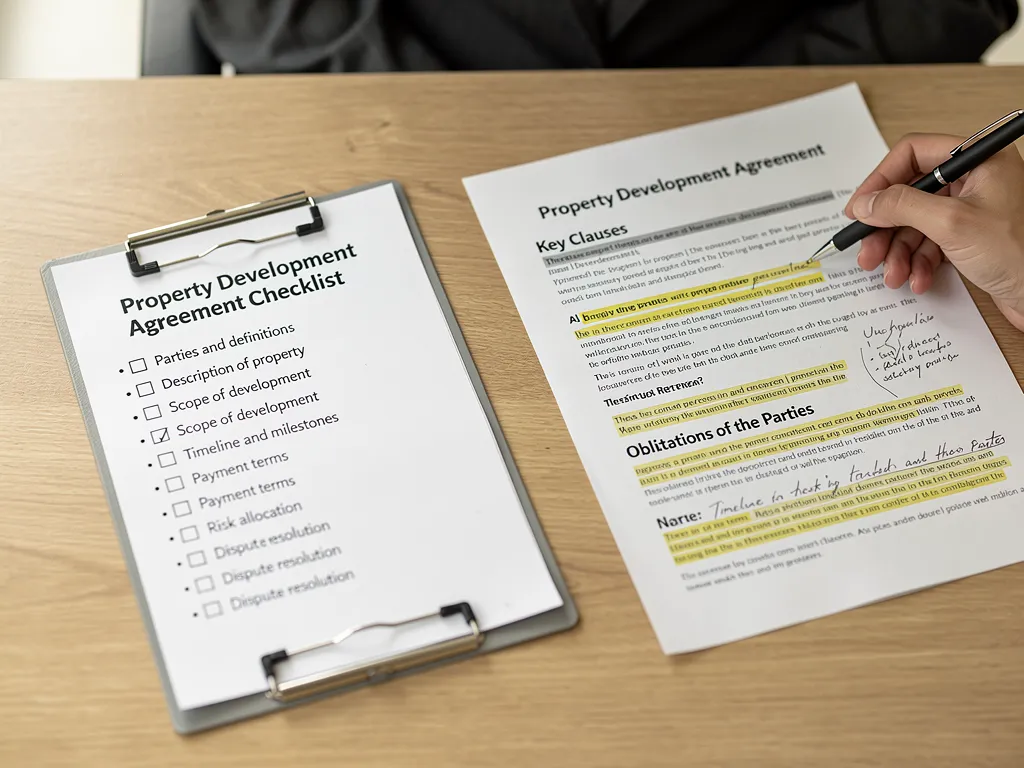
A well-drafted development agreement should address the following matters clearly and comprehensively:
- Parties and roles: Precise identification of each party and their respective obligations throughout the project lifecycle.
- Description of the land: A clear legal description of the site, including any title encumbrances or easements affecting development.
- Planning obligations: The steps each party must take to secure planning permission, including the allocation of costs and the conduct of any appeals.
- Programme and milestones: Key dates and deliverables, with mechanisms for extension where circumstances change.
- Financial arrangements: The funding structure, development costs, profit-sharing methodology, and any security or guarantee provisions.
- Risk allocation: How construction risk, planning risk, and market risk are distributed between the parties.
- Default and termination: The remedies available to each party in the event of a breach, and the circumstances in which the agreement may be terminated.
- Dispute resolution: Whether disputes are to be referred to mediation, expert determination, or arbitration before litigation is contemplated.
The Role of Planning Law in Development Agreements
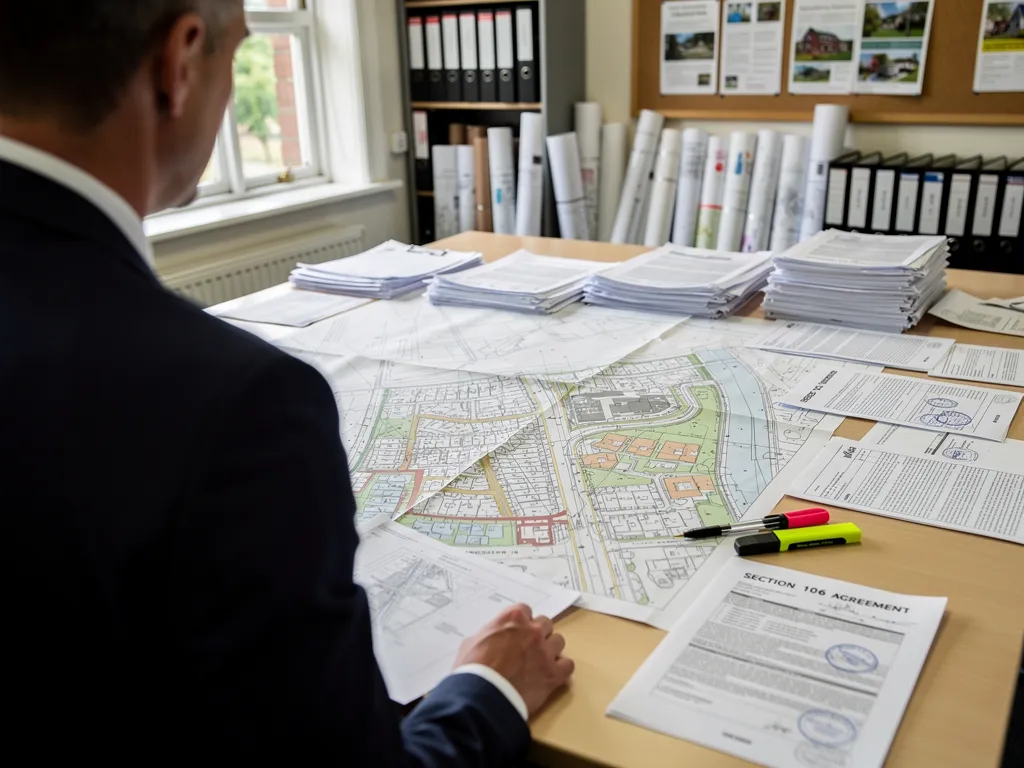
Development agreements do not operate in isolation from the planning system. Where a development requires planning permission, the agreement must be drafted with close regard to any planning conditions, Section 106 agreements, or Community Infrastructure Levy (CIL) obligations that accompany that consent.
Section 106 agreements — negotiated between a developer and a local planning authority — impose obligations on the developer as a condition of planning consent. These may include requirements to provide affordable housing, contribute to local infrastructure, or restrict certain uses of the land. A development agreement must accurately reflect these obligations and allocate responsibility for their discharge between the parties.
Failure to align a development agreement with its associated planning obligations can result in planning conditions being unmet, triggering enforcement action by the local planning authority or liability disputes between the contracting parties.
Common Risks and How to Mitigate Them
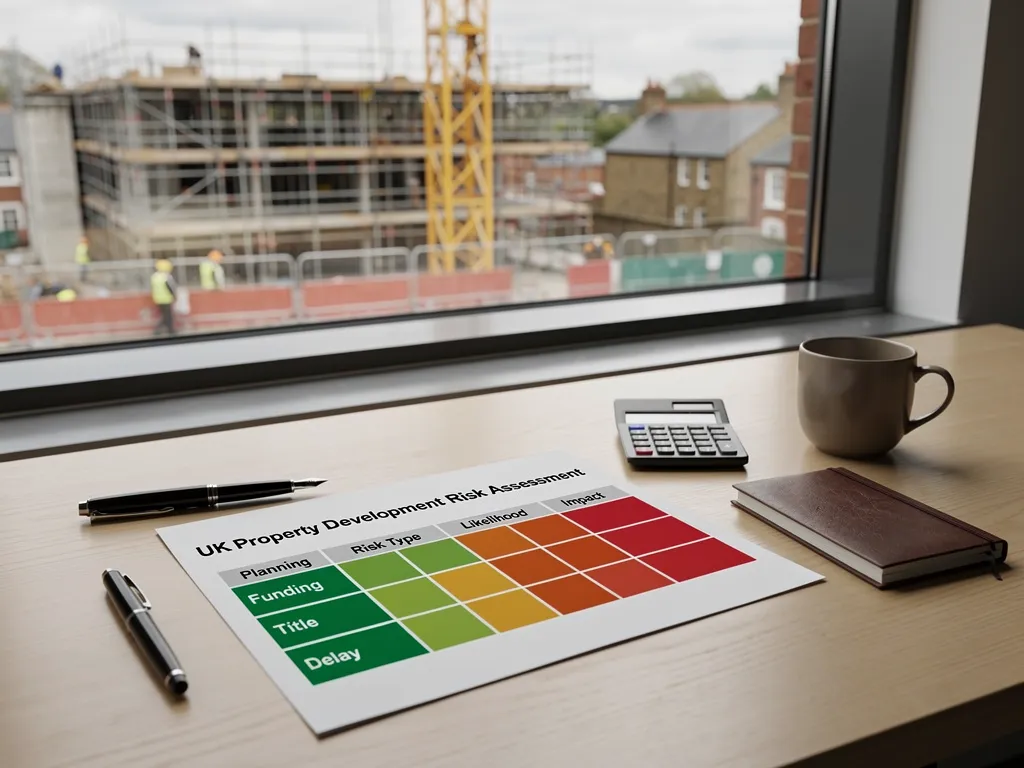
Development projects are inherently complex, and several recurring risks arise in the context of development agreements:
Planning risk arises where planning permission is refused, granted subject to onerous conditions, or successfully challenged by way of judicial review. Agreements should clearly specify what happens in each scenario, including whether the developer may appeal and at whose cost.
Funding risk materialises where a party is unable to secure or maintain the financing required to complete the development. Security provisions, step-in rights, and funding warranties are important protective mechanisms.
Title risk concerns defects in the landowner’s title or the existence of third-party rights — such as restrictive covenants or rights of way — that impede development. Thorough due diligence prior to execution is essential.
Delay risk is managed through carefully drafted programme provisions, with appropriate carve-outs for events beyond a party’s reasonable control (force majeure), and robust mechanisms for extensions of time and the consequences of delay.
Why Specialist Legal Advice Is Essential

Development agreements are among the most technically demanding documents encountered in property and planning law. The intersection of contract law, planning law, land law, and construction law requires practitioners with deep expertise across each of these disciplines.
Charrette Law Firm advises landowners, developers, investors, and local authorities on the full spectrum of development agreement matters, from initial structuring and negotiation through to execution and any subsequent dispute resolution. The firm’s integrated approach — combining specialist planning law expertise with property and commercial law knowledge — ensures that clients’ interests are protected at every stage of a project.
Whether a project involves a straightforward conditional contract or a complex multi-party joint venture, Charrette Law provides clear, precise, and commercially astute advice tailored to the specific requirements of each transaction.
Contact Charrette Law Firm
For expert legal advice on development agreements and all aspects of planning and property law, contact Charrette Law Firm.
- Email: [email protected]
- Phone: +44 (0)7772 813674
- Address: Medway St, Maidstone, ME14 1JS
- Website: charrettelaw.co.uk