Tree Surgery Planning Permission and Regulations: A Guide for Property Owners
Tree surgery can improve a tree’s health, reduce safety risks and protect the appearance of a property. However, before arranging pruning, crown reduction or tree removal, property owners need to establish whether tree surgery planning permission or other legal consent is required.
In England, certain trees are protected by Tree Preservation Orders (TPOs), while trees in conservation areas may be subject to a separate notification procedure. Wildlife protection laws, planning conditions and development requirements can also restrict when and how tree work is carried out.
Carrying out unauthorised work can lead to prosecution, financial penalties and requirements to replace trees. Understanding the rules before appointing a contractor can help you avoid unnecessary disputes and delays.
This guide explains when permission is required, how to apply, which exemptions may apply and what property owners should consider before undertaking tree surgery.
What Is Tree Surgery?
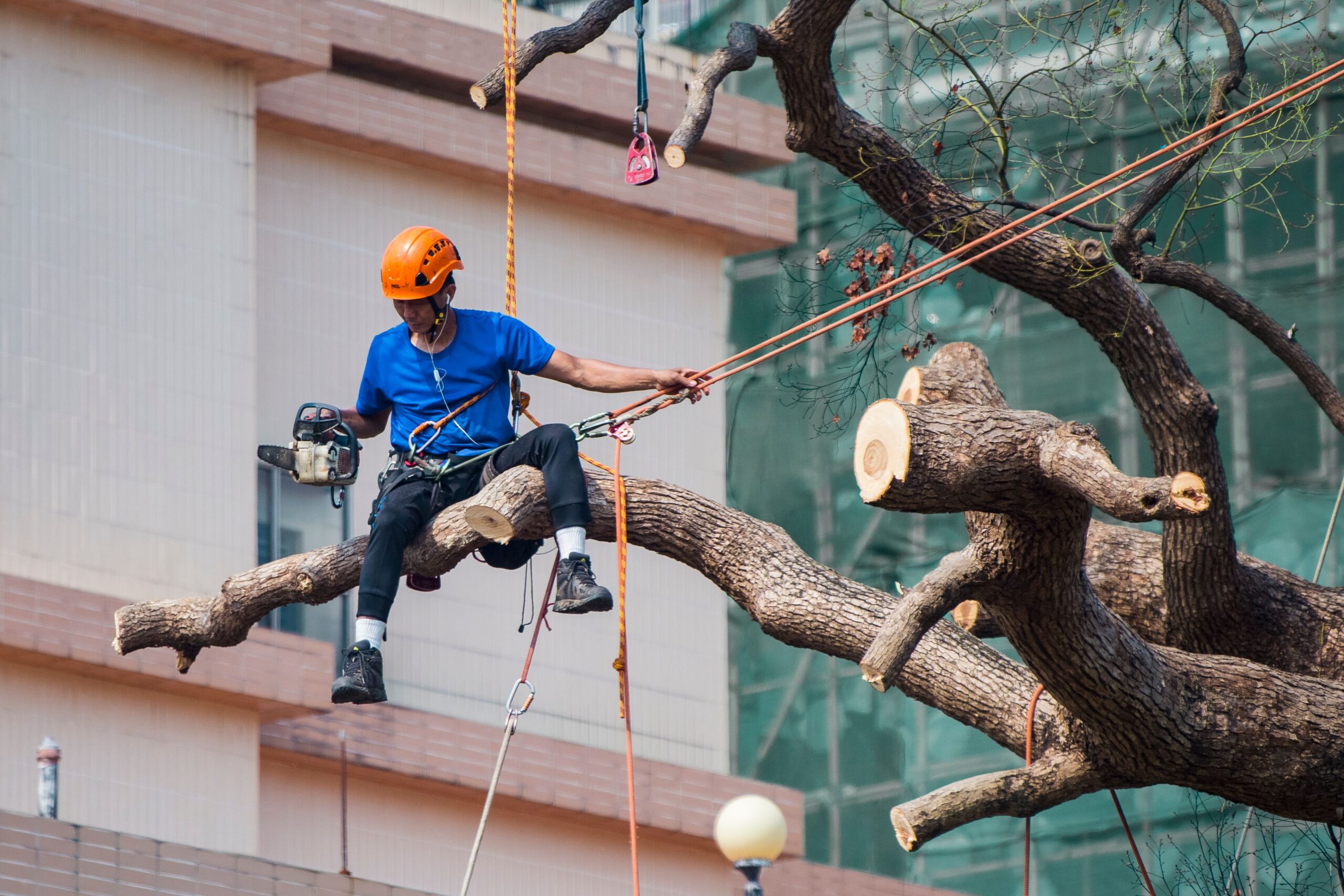
Tree surgery refers to professional work undertaken to maintain a tree’s health, structure, safety or appearance. It may involve pruning, removing damaged branches, managing growth or, where justified, removing a tree entirely.
Common types of tree surgery include:
- Crown reduction: Reducing the overall size of a tree’s crown while retaining an appropriate natural shape.
- Crown thinning: Selectively removing branches to reduce the density of the crown.
- Crown lifting: Removing or shortening lower branches to increase clearance beneath the tree.
- Deadwooding: Removing dead or dying branches where appropriate.
- Formative pruning: Guiding a young tree’s development and structure.
- Pollarding: Managing regrowth through a specific pruning system.
- Tree removal: Felling a tree where removal is justified and legally permitted.
Although many routine pruning activities do not require planning permission, the position changes when a tree is protected or affected by planning conditions or other legal restrictions.
Do You Need Planning Permission for Tree Surgery?
You do not usually need a separate planning permission application for routine tree maintenance, but protected trees may require consent or advance notification.
Before arranging work, establish whether the tree is covered by a Tree Preservation Order, stands within a conservation area or is affected by a planning condition or other restriction.
| Situation | What you may need |
|---|---|
| Ordinary tree outside a protected area | Usually no separate tree-work consent, subject to other restrictions |
| Tree covered by a Tree Preservation Order | Written consent from the local planning authority, unless a specific exemption applies |
| Qualifying tree in a conservation area | Six weeks’ written notice to the local planning authority, unless an exception applies |
| Tree affected by a planning condition | Compliance with the relevant planning permission and conditions |
| Tree containing protected wildlife or nesting birds | Compliance with applicable wildlife legislation, regardless of tree-protection status |
The requirements depend on the tree’s location, legal status and the type of work proposed. Check the government guidance on Tree Preservation Orders and conservation areas before work begins.
What Is a Tree Preservation Order (TPO)?
A Tree Preservation Order is a legal order made by a local planning authority to protect individual trees, groups of trees or woodlands where preservation is considered necessary in the interests of amenity.
A TPO can restrict activities such as cutting down, uprooting, topping, lopping, damaging or destroying a protected tree.
The restrictions may apply even when the tree is on privately owned land. Ownership alone does not give a property owner the right to undertake otherwise prohibited work.
How do you check whether a tree has a TPO?
Before instructing a tree surgeon:
- Contact the local planning authority or check its online planning and tree-protection records.
- Confirm the precise location of the tree and whether an order applies.
- Check whether the proposed work is covered by an exemption.
- Obtain written consent where required.
- Give the contractor the relevant decision and any conditions attached to it.
Online maps may not show every recent order. If the position is uncertain, ask the local authority to confirm it.
How do you apply for TPO consent?
An application generally requires details of the tree, its location and the work proposed. Supporting evidence may include photographs, an arboricultural report, a site plan and an explanation of why the work is necessary.
The local planning authority will assess the application and may grant consent, impose conditions or refuse the proposal.
The usual determination period is eight weeks, although the applicable procedure and any agreed extension should be checked with the authority. Do not assume that silence automatically authorises the work.
If consent is refused, or the authority fails to determine an application within the applicable period, an appeal may be available. Follow the appeal instructions and applicable deadline in the decision or official guidance.
Tree Surgery in a Conservation Area
Conservation areas are designated because of their special architectural or historic interest. Trees can contribute significantly to the character and appearance of these areas, so additional protection may apply.
In England, a qualifying tree in a conservation area may be protected even if no individual TPO has been made.
When must you give notice?
As a general rule, you must give the local planning authority six weeks’ written notice before carrying out work on a qualifying tree in a conservation area.
The general size threshold is a trunk diameter exceeding 75 mm, measured at 1.5 metres above ground level. A separate threshold may apply to certain thinning operations, so check the official guidance before relying on an exemption.
The notice should identify the tree and clearly describe the proposed work. A location plan, photographs and supporting explanation can help the authority assess the proposal.
During the six-week period, the authority may decide that the tree should receive formal protection by making a TPO. If the authority does not object within the applicable period, the notified work can generally proceed as described, subject to other legal restrictions.
A conservation area notice is not the same as a TPO application. The first gives the authority an opportunity to consider the proposed work; the second seeks consent to carry out specified work on an already protected tree.
Are There Exceptions for Dead or Dangerous Trees?
Some exemptions allow work on protected trees without the usual consent procedure. However, a tree being dead, diseased or potentially dangerous does not automatically mean that all restrictions can be ignored.
The precise requirements depend on the protection in place and the urgency of the risk.
Dead trees and branches
Under the English TPO rules, certain work to dead trees may be exempt from consent, but advance written notice is generally required before work on a dead tree unless it is urgently necessary because of an immediate risk of serious harm. The usual notice period is five working days.
Removing dead branches from a living tree may be treated differently. Other legal protections, including wildlife legislation, can still apply.
Dangerous trees
An exemption may apply where work is urgently necessary to remove an immediate risk of serious harm. The exception should not be treated as permission to undertake extensive work simply because a tree is considered undesirable or inconvenient.
Where circumstances allow, contact the local planning authority before starting. Keep photographs, professional assessments and a record of why urgent intervention was necessary.
Other exemptions
Depending on the applicable legislation and circumstances, exemptions may also cover certain work required by statute, highway operations, statutory undertakers or other specified purposes.
Do not assume that fruit trees, diseased trees, trees near utilities or trees affecting a building are automatically exempt. Check the particular legal provision and obtain advice where necessary.
How to Apply for Tree Surgery Permission
If your proposed work requires consent or notification, begin the process before booking a contractor or setting a work date.
Step 1: Identify the tree and its protection status
Record the location, species and approximate dimensions of the tree. Check whether it is covered by a TPO, lies within a conservation area or is subject to planning conditions.
Step 2: Obtain professional advice
A qualified arborist can assess the tree’s condition and recommend proportionate work. Where a tree is protected, a professional report may help explain why the proposed work is necessary and whether less extensive alternatives are appropriate.
Step 3: Prepare the application or notice
Describe each proposed operation clearly. Include the tree’s location, the reasons for the work and supporting photographs or plans where relevant.
Avoid vague descriptions such as “cut back tree”. Specify the intended work and its extent so the authority can assess the proposal.
Step 4: Submit the paperwork
Use the relevant local authority’s tree-work application or notification process. Follow its instructions on supporting documents and submission requirements.
Step 5: Wait for the applicable period or decision
For a TPO, obtain consent before starting work unless a valid exemption applies. For a conservation area notification, allow the full six-week period unless the authority responds earlier and confirms that the work may proceed.
Keep a copy of the application, notice, correspondence and any consent or conditions. Give relevant documents to your contractor.
Tree Surgery, Nesting Birds and Protected Wildlife
Tree-protection rules are only one part of the legal framework. Tree surgery must also comply with applicable wildlife legislation.
In England and Wales, the Wildlife and Countryside Act 1981 protects wild birds, their eggs and nests in specified circumstances. It is generally an offence to intentionally take, damage or destroy the nest of a wild bird while it is in use or being built, subject to the legislation’s provisions.
Bats and their roosts receive additional protection under relevant wildlife and conservation legislation. A tree may contain a bat roost even if no bats are immediately visible.
Before work begins, the contractor should consider whether the tree may contain nesting birds, bats or other protected species. If evidence of protected wildlife is found, work may need to stop while an appropriate ecologist assesses the situation.
Tree work is not automatically lawful simply because planning consent or TPO consent has been granted. Where protected species may be affected, obtain specialist advice and any required licence before proceeding.
There is no universal rule that all tree surgery must stop throughout a fixed nesting season. The legal question is whether the proposed work would breach the relevant wildlife protections. Nevertheless, checking for nesting birds and other wildlife before work begins is an important precaution.
Tree Surgery During Construction and Property Development
Trees can be affected by extensions, new buildings, driveways, demolition, drainage works and changes to ground levels. Development proposals may therefore require arboricultural information as part of the planning process.
A local planning authority may request a tree survey, an Arboricultural Impact Assessment (AIA), a tree protection plan or details of how trees will be protected during construction.
An AIA assesses how the proposed development may affect existing trees and identifies measures to avoid or reduce harm. Tree protection measures can include protective fencing, defined root protection areas and restrictions on excavation, storage or vehicle movements near trees.
BS 5837:2012 is a widely used British Standard concerning trees in relation to design, demolition and construction. Developers should verify the current edition and any applicable planning requirements when preparing project documents.
Can planning permission override tree protection?
Planning permission does not automatically authorise every type of tree work. The scope of the permission, its approved plans, relevant conditions and the applicable tree legislation must be considered together.
Where tree work is necessary to implement an approved development, specific statutory provisions or exemptions may apply. However, these should not be assumed to cover unrelated work or trees outside the approved scheme.
Before commencing a development, review the planning decision, tree-related conditions and any TPO or conservation area requirements. Failure to comply may lead to enforcement action and delays to the project.
How to Choose a Qualified Tree Surgeon
Tree surgery can involve working at height, using specialist equipment and managing risks to people, buildings and public spaces. Choosing a competent contractor is important for safety as well as legal compliance.
Before appointing a tree surgeon, consider the following:
- Relevant qualifications: Ask about training and certificates appropriate to the work being undertaken.
- Professional recognition: Check whether the contractor holds current approval or accreditation through a recognised arboricultural scheme.
- Insurance: Confirm suitable public liability insurance and any other cover relevant to the work.
- Written quotation: Request a clear description of the proposed work, its cost and how waste will be handled.
- Legal awareness: Ask how the contractor will check TPOs, conservation area restrictions and wildlife risks.
- Permission arrangements: Confirm who will prepare and submit any required application or notice, and who will check that work can lawfully begin.
Professional membership and qualifications can help you assess competence, but they do not replace the need to verify the contractor’s insurance and the legal status of the tree.
What Are the Penalties for Unauthorised Tree Surgery?
Unauthorised work on a protected tree can have serious legal and financial consequences.
Under section 210 of the Town and Country Planning Act 1990, offences involving a TPO can include cutting down, uprooting or destroying a protected tree, or damaging, topping or lopping it in a way likely to destroy it. Other breaches can also be offences.
For serious offences in England and Wales, a court can impose an unlimited fine. The applicable penalty depends on the offence, the jurisdiction and the relevant legislation. The often-quoted £20,000 figure should not be treated as a universal maximum for serious TPO offences.
Other possible consequences include:
- Prosecution for unlawful work.
- Requirements to plant replacement trees in circumstances specified by law.
- Enforcement action where planning conditions have been breached.
- Additional costs associated with investigations, professional advice or remedial work.
- Delays to property development or related construction work.
The fact that a tree is on private property is not, by itself, a defence. Owners and contractors should establish the relevant restrictions before work starts.
Frequently Asked Questions
Do I need planning permission to prune a tree in my garden?
Usually, routine pruning of an unprotected tree does not require a separate planning permission application. However, a TPO, conservation area rules, planning conditions or wildlife legislation may restrict the work. Check the tree’s status first.
How long does permission for tree surgery take?
A TPO application is generally determined within eight weeks. For qualifying tree work in a conservation area, the usual notification period is six weeks. Check the relevant authority’s process and do not start work prematurely.
Can I remove a protected tree if it is dangerous?
A specific exemption may apply where work is urgently necessary to remove an immediate risk of serious harm. Other dangerous-tree situations may still require consent or notice. Document the risk and contact the local authority where circumstances allow.
Can my neighbour carry out tree surgery without telling me?
That depends on the tree’s location, ownership and legal protection. A neighbour may be able to carry out lawful work on their own unprotected tree without notifying you. Protected-tree rules, wildlife legislation, property rights or other restrictions may change the position.
Can I appeal if the council refuses tree surgery consent?
An appeal may be available against a refusal of TPO consent, or where an application has not been determined within the applicable period. Check the decision notice and official appeal guidance for the relevant procedure and deadline.
Does planning permission mean I can remove every tree on a development site?
No. Planning permission does not necessarily remove all tree-related restrictions. Check the approved plans, planning conditions, TPO status, conservation area requirements and any relevant wildlife protections before starting work.
Is tree surgery restricted during bird nesting season?
There is no blanket prohibition on every type of tree surgery during a single nationwide nesting-season period. However, work that unlawfully damages or destroys a nest in use or being built may be an offence. Appropriate checks should be made before work begins.
Conclusion: Check Tree Surgery Rules Before Work Begins
Tree surgery can protect trees, improve safety and support responsible property management, but the work must be planned around the applicable legal requirements.
Before arranging pruning or removal, confirm whether the tree is covered by a Tree Preservation Order, lies within a conservation area or is affected by planning conditions. Check for protected wildlife and ensure that any required consent or notification has been completed.
Where the legal position is uncertain, seek advice from the local planning authority or a suitably qualified professional before proceeding. Taking these steps can help prevent avoidable disputes, penalties and delays.
Need advice about a property development or planning issue? Visit Charrette Law to explore the firm’s services or contact the team to discuss your circumstances.