
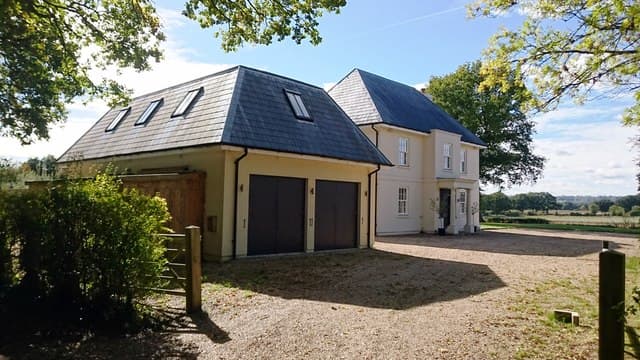
Heritage Assets and the Statutory Duty to Preserve
The intersection of Design, Heritage & Environmental Considerations has become a pivotal point for communities, architects, planners, and legislators around the world. As urbanization accelerates and technological advancements bring rapid changes to built environments, the need to protect irreplaceable heritage assets has never been more pressing. The concept of heritage includes not just the physical manifestations such as buildings, monuments, and landscapes but also the intangible cultural values attached to these assets. The statutory duty to preserve these treasures is a legal and moral imperative, shaping the contemporary approach to design and environmental stewardship.
Understanding Heritage Assets
Heritage assets are physical pieces of history that hold cultural, architectural, or environmental significance. These may range from ancient archaeological sites and historical buildings to historic parks, landscapes, and even urban streetscapes. These assets serve as tangible links to the past, telling stories about the evolution of society, local customs, artistic movements, and technological advancements. In many jurisdictions, heritage assets are protected under national and international laws, which impose a statutory duty to preserve them for the benefit of present and future generations.
What sets heritage assets apart from ordinary structures is their recognized value. This can be aesthetic, commemorative, symbolic, or simply a marker of a particular historical moment. The value may also be attributed to ecological features, with environment-rich habitats or old-growth trees forming part of a community’s natural heritage. Therefore, the scope of preservation goes beyond the purely architectural, encompassing a wide range of considerations that must inform all interventions related to such assets.
Legislative Frameworks Governing Heritage Preservation
The responsibility to protect heritage assets is clearly delineated through a layered network of statutes and policies at local, national, and sometimes international levels. A prominent international framework comes from UNESCO’s World Heritage Convention, which identifies and seeks the preservation of sites with “outstanding universal value.” Nationally, many countries have heritage trusts or statutory registers such as the National Heritage List for England or the United States National Register of Historic Places where designated assets are afforded legal protection.
Key legislation typically includes requirements for consent before alteration, demolition, or even maintenance work is undertaken on listed assets. The legal framework often mandates that such works be assessed against established conservation principles, such as “minimum intervention,” “reversibility” of additions, and the need to respect original materials and craftsmanship. This regulatory oversight fundamentally shapes both the maintenance and adaptive reuse of heritage properties.
Balancing Design, Heritage & Environmental Considerations
Preservation does not mean freezing heritage assets in time. Rather, it requires a sensitive balance where design, heritage, & environmental considerations converge. Modern needs such as accessibility, energy efficiency, and public utility must be addressed without compromising the historic character or significance of the asset.
This balance is often achieved through the principle of “adaptive re-use,” wherein heritage buildings are repurposed for contemporary functions (e.g., converting mills into apartments or former factories into cultural centers). Architects and designers must navigate a complex set of requirements: sympathetic retrofitting, maintaining sight lines, retaining original materials, and ensuring any new interventions are both distinguishable and harmonious.
Environmental considerations add another layer of complexity. Many heritage assets, particularly landscapes and old buildings, possess ecological value due to their role in biodiversity or their traditional, climate-sensitive construction methods. Retrofitting for energy efficiency must therefore be approached carefully, avoiding damage to historic fabric and respecting traditional ventilation and lighting strategies.
Environmental Impact Assessments in Heritage Contexts
Before any work can commence on a heritage asset, environmental impact assessments (EIAs) are often required by statutory processes. These EIAs consider not only the direct effects on the asset itself but also on the larger environment and community. For example, introducing new infrastructure near a historic building or heritage landscape may have secondary effects, such as disrupting habitats, altering hydrology, or changing the character of the area. These impacts must be evaluated and mitigated as part of the statutory duty to preserve.
In some cases, the historic asset itself may offer environmental benefits such as public green spaces that help regulate urban microclimates or water management systems based on traditional ecological knowledge. Recognizing these contributions is an essential component of informed, responsible design.
Integrating Sustainability and Conservation
Sustainability has become a defining paradigm in contemporary design, but integrating it with conservation presents unique challenges. Retrofitting heritage buildings with energy-efficient technologies without compromising their historic fabric is an ongoing area of research and innovation. Techniques include using breathable insulation, reversible window upgrades, secondary glazing, and installing renewable energy systems in non-intrusive ways.
Similarly, the use of traditional materials and building techniques is often more sustainable than relying on modern, energy-intensive alternatives. Lime mortars, natural paints, and local timber have environmental advantages and preserve the authenticity of heritage structures. Heritage conservationists increasingly advocate for a “whole-life approach” which recognizes that retaining and maintaining existing buildings is, in itself, a highly sustainable act because it avoids the environmental costs associated with demolition and new construction.
The Role of Community and Stakeholder Engagement
Preserving heritage assets is not solely a technical or legal matter; it is deeply embedded in social values and community identity. Engaging all stakeholders, from local residents and community groups to conservation experts and government bodies, ensures that a range of views and knowledge inform the process.
Community participation can take many forms, including public consultations, heritage walks, participatory mapping, and citizen science projects. This engagement is vital for fostering a sense of ownership and stewardship, leading to more sustainable outcomes. Involving indigenous groups or minority communities is particularly important when heritage assets carry intangible cultural significance that may not be readily apparent through traditional conservation criteria.
Contemporary Design Challenges in Heritage Contexts
Designing interventions within or adjacent to heritage assets presents unique challenges. Architects must create a dialogue between the old and the new, introducing contemporary features that do not overshadow or diminish historical value. This might mean using modern materials in a way that contrasts yet complements original features, or employing innovative structural solutions to meet safety and usability standards while retaining historic fabric.
Some of the most acclaimed heritage interventions are those that clearly distinguish between what is new and what is original, allowing viewers to read the layers of history. Yet, such approaches are always site-specific and context-dependent: strict minimalism may be appropriate in one instance, while a more interpretive reconstruction may be called for in another.
Legal Challenges and Enforcement
Despite the statutory duty to preserve, enforcement remains a challenge. In some jurisdictions, financial constraints, limited expertise, or political pressures can undermine regulatory frameworks. Unlisted or “vernacular” heritage assets those without formal protection are particularly vulnerable to loss.
Legal mechanisms for enforcement can include fines, compulsory purchase orders, or restoration mandates. However, positive incentives, such as grants, tax incentives, and technical assistance, often prove more effective in encouraging property owners to comply with preservation standards. In many cases, public-private partnerships are essential for mobilizing the necessary resources to protect and maintain heritage assets on a long-term basis.
Emerging Trends: Digital Documentation and Smart Conservation
Advances in digital technology are transforming the field of heritage preservation. High-resolution 3D scanning, virtual reality reconstructions, and GIS-based mapping now allow for more accurate documentation and planning. These tools help stakeholders visualize proposed interventions and anticipate their impact on heritage assets and their settings.
Smart sensors can monitor structural health, detect environmental changes, and provide early warnings of risks such as water infiltration or material decay. By gathering and analyzing data over time, conservationists can make more informed, proactive decisions—the essence of ‘smart conservation’.
Heritage, Identity, and Tourism
Heritage assets are often central to national and local identity. They provide the settings for public rituals, collective memory, and artistic inspiration. At the same time, they are magnets for tourism, which can bring economic benefits but also poses risks. Overtourism can erode the very qualities that attract visitors, causing physical wear and social displacement.
Managing tourism sustainably involves controlling visitor flow, investing in infrastructure, and reinvesting proceeds in conservation efforts. This balance is especially difficult in fragile environments or in sites where heritage assets are already under strain.
Case Studies: Successful Integration of Design, Heritage & Environmental Considerations
Internationally, there are many examples of successful balances struck between design, heritage preservation, and environmental sustainability:
- The High Line (New York City, USA): An elevated railway transformed into a public park, retaining industrial heritage while providing green space and promoting biodiversity.
- The Reichstag (Berlin, Germany): The historic parliament building was retrofitted with a glass dome and energy-efficient features, symbolizing transparency while showcasing environmental innovation.
- King’s Cross Regeneration (London, UK): Victorian industrial architecture has been sensitively adapted for new uses, supported by sustainable urban infrastructure and robust community consultation.
The Statutory Duty to Preserve and the Importance of Strategic Legal Advice
Heritage assets occupy a uniquely protected position within the planning system. Decision-makers are under a statutory duty, pursuant to the Planning (Listed Buildings and Conservation Areas) Act 1990, to have special regard to the desirability of preserving listed buildings and their settings, and to pay special attention to preserving or enhancing the character or appearance of conservation areas. This duty is reinforced by the policy framework set out in the National Planning Policy Framework, which requires “great weight” to be given to the conservation of heritage assets.
In practice, this means that proposals affecting heritage assets must be supported by rigorous heritage impact assessments, clear justification of public benefits, and carefully structured design responses. Even well-intentioned schemes can fail where harm is not properly identified, assessed, or outweighed in the planning balance. Unauthorised works to listed buildings may also give rise to enforcement action and, in some cases, criminal liability.
For developers, landowners, public bodies, and institutions, early legal input is critical. A clear understanding of statutory duties, heritage significance, and environmental constraints can shape viable schemes, manage risk, and strengthen prospects of securing listed building consent and planning permission.
Contact Charrette Law for specialist advice on heritage assets, listed building consent, conservation area controls, enforcement defence, planning appeals, and judicial review. Our planning solicitors provide strategic, evidence-led guidance to ensure your project respects the statutory duty to preserve while remaining commercially and legally secure.