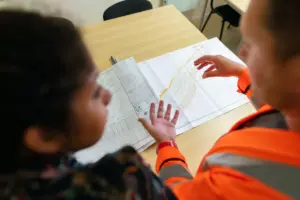
Community engagement is an important part of the planning process in the UK. Whether a proposal involves new housing, commercial development, a change of use, rural development or a major regeneration scheme, engaging with the local community can help identify concerns, improve proposals and support better planning outcomes.
For developers and landowners, early engagement can provide valuable insight into local concerns before a planning application is submitted. It can help identify potential issues relating to design, traffic, parking, access, landscaping and the wider impact of development.
For residents and community groups, engagement provides an opportunity to understand proposed development and raise concerns about how a scheme may affect the local area.
However, community engagement does not mean that every objection must result in changes to a proposal. Nor does it replace the formal planning application and consultation process. Planning decisions must ultimately be made in accordance with the relevant legal and policy framework.
At Charrette Law, we advise clients on planning and property matters, including planning applications, planning objections, planning appeals, development proposals and other issues affecting land and property.
What Is Community Engagement in Planning?
Community engagement in planning is the process of involving local residents, businesses, community groups and other interested parties in decisions relating to development and the future use of land.
Engagement can take place at different stages of the planning process.
For example, a Local Planning Authority may consult the public when preparing a Local Plan or other planning policy document. A developer may also engage with the local community before submitting a planning application.
The purpose of community engagement may include:
- Understanding local views and concerns
- Identifying potential planning issues
- Gathering information about the local area
- Improving development proposals
- Explaining the purpose of a proposed development
- Encouraging meaningful participation
- Identifying possible solutions
- Improving transparency and communication
Effective engagement should give people a genuine opportunity to understand what is proposed and provide relevant feedback.
Why Is Community Engagement Important?
Planning decisions can have a significant effect on the people who live and work in an area.
A proposed development may affect:
- Traffic and parking
- Housing provision
- Local services
- Public spaces
- Green infrastructure
- The character of an area
- Heritage assets
- Biodiversity
- Employment opportunities
- Community facilities
Early engagement can help identify these issues before a proposal reaches the final stages of the planning process.
For developers, identifying concerns early may provide an opportunity to amend or improve a proposal before significant time and resources are invested in a final planning application.
For communities, early engagement can provide a better opportunity to influence the development process before key decisions have been finalised.
Community Engagement and Local Planning Authorities
Local Planning Authorities play an important role in engaging communities in planning matters.
Their responsibilities may involve engagement in relation to:
- Local Plan preparation
- Planning applications
- Major development proposals
- Design codes
- Neighbourhood planning
- Supplementary planning guidance
- Other planning policy documents
The planning system provides opportunities for communities to comment on both planning policy and individual development proposals.
However, the stage at which a person becomes involved can be important.
Residents often focus on a planning application once it has been submitted. By this stage, the site may already have been identified for development through a Local Plan or other planning policy process.
For this reason, early participation in plan-making can be just as important as responding to individual planning applications.
Community Engagement During Local Plan Preparation
A Local Plan helps guide decisions about how land should be used and developed within a particular area.
Local Plans can address matters such as:
- Housing
- Employment land
- Transport
- Green Belt
- Open space
- Community facilities
- Heritage
- Biodiversity
- Climate considerations
- Infrastructure
- Development sites
Community engagement during the preparation of a Local Plan can give residents, businesses and other interested parties an opportunity to comment on important questions about the future of their area.
Why Should Communities Engage With Local Plans?
Planning policies and site allocations can influence future planning applications.
For example, engagement during the Local Plan process may allow communities to comment on:
- Where new housing should be located
- Which areas should be protected
- Where employment development should take place
- Infrastructure requirements
- Green spaces and public facilities
- Development boundaries
- The design and character expected from future development
Once a site has been allocated for development, the discussion may later focus more on the details of the proposal rather than whether the principle of development should take place.
This makes early community engagement particularly important.
Community Engagement Before a Planning Application
Developers may engage with the local community before submitting a formal planning application.
This is commonly known as pre-application community engagement.
Pre-application engagement can be particularly useful for larger, more complex or potentially controversial developments.
The process may involve:
- Public exhibitions
- Community meetings
- Workshops
- Online consultations
- Surveys
- Questionnaires
- Consultation websites
- Interactive maps
- Virtual meetings
- Meetings with local representatives
The appropriate method will depend on the size, location and nature of the proposed development.
Is Pre-Application Community Engagement Mandatory?
Not in every case.
Some forms of consultation may be voluntary, while particular types of development can be subject to specific statutory consultation requirements.
Developers should therefore consider the nature of the proposal and establish whether any formal consultation obligations apply.
Even where engagement is not legally required, it may still provide significant practical benefits.
A developer who understands local concerns before submitting an application may be better placed to address those concerns through the design and planning strategy.
What Are the Benefits of Early Community Engagement?
Early community engagement can benefit developers, landowners, Local Planning Authorities and communities.
Identifying Concerns Before Submission
Local residents may have knowledge of issues that are not immediately apparent from plans or desktop assessments.
For example, communities may raise concerns about:
- Existing traffic congestion
- Parking pressures
- Flooding
- Pedestrian safety
- Local access problems
- Noise
- Loss of green space
- Pressure on local facilities
Identifying these issues before an application is submitted may allow the developer to investigate them and, where appropriate, adjust the proposal.
Improving Development Proposals
Community feedback may also identify practical improvements.
These could include:
- Better pedestrian routes
- Improved vehicle access
- Additional landscaping
- Changes to building layout
- Greater separation from neighbouring properties
- Additional public space
- Improved parking arrangements
Not every suggestion will necessarily be adopted. A developer must balance a range of planning, commercial, technical and legal considerations.
However, meaningful engagement can help ensure that relevant concerns are considered rather than discovered for the first time during the formal consultation process.
Reducing Unnecessary Conflict
Development proposals can sometimes create opposition because residents feel they have not been informed about what is proposed or why.
Early engagement gives developers an opportunity to explain:
- What is being proposed
- Why the development is needed
- Why the site has been selected
- What benefits the scheme may provide
- What potential impacts have been identified
- How concerns are being addressed
Clear communication does not guarantee support, but it can help create a more transparent and constructive process.
Community Engagement for Major Developments
Community engagement can be particularly important where a proposal is likely to affect a significant number of people.
Major developments may include:
- Large housing schemes
- Regeneration projects
- Mixed-use developments
- Infrastructure projects
- Commercial developments
- New community facilities
These developments can involve significant changes to an area, including new roads, homes, shops, schools, employment space and public open areas.
The scale of potential impact means that early engagement can provide an opportunity to identify concerns before the development proposal is finalised.
Community Engagement and Development Design
Community feedback can sometimes influence the design and layout of a proposed development.
Relevant issues may include:
- Building height
- Density
- Layout
- Materials
- Landscaping
- Streetscape
- Public spaces
- Accessibility
- Local character
- The relationship with neighbouring properties
Where concerns are raised early, a developer may decide to make changes to the proposal.
For example, a scheme may be amended by:
- Reducing the height of a building
- Moving development away from neighbouring properties
- Increasing landscaping
- Improving pedestrian access
- Revising parking arrangements
- Changing external materials
- Providing additional public space
Community engagement does not mean that every requested change must be accepted. However, it can form part of the process through which a proposal develops.
Formal Consultation on Planning Applications
Community engagement before a planning application is submitted is different from the formal consultation process that follows the submission of an application.
Once a planning application has been submitted, the Local Planning Authority will normally publicise the proposal and invite representations.
Residents and other interested parties may have the opportunity to:
- Review the planning application
- Examine the submitted plans
- Read supporting documents
- Submit comments
- Object to the proposal
- Support the proposal
- Contact the Local Planning Authority
- Participate in relevant planning meetings
The precise process can vary depending on the Local Planning Authority and the nature of the application.
What Should a Community Objection Focus On?
A planning objection should focus on relevant planning matters rather than personal disagreement with the applicant or general opposition to development.
Material planning considerations may include:
- Highway safety
- Traffic generation
- Parking
- Loss of privacy
- Overlooking
- Loss of light
- Noise and disturbance
- Design
- Character of the area
- Landscape impact
- Flood risk
- Biodiversity
- Heritage
- Green Belt considerations
- Conflict with relevant planning policies
A detailed and well-supported representation may be more effective than a large number of identical objections that do not identify specific planning issues.
What Happens to Community Feedback?
Community feedback can be considered by the Local Planning Authority where it raises relevant planning matters.
However, the existence of objections does not automatically mean that planning permission must be refused.
Similarly, community support does not automatically mean that an application must be approved.
The Local Planning Authority must assess the proposal against the development plan and other material planning considerations.
This means that the quality and relevance of representations can be particularly important.
A small number of well-researched objections may identify a significant planning issue. Equally, a large number of objections may carry limited weight if they are based primarily on matters that are not relevant to the planning decision.
Digital Community Engagement
Digital tools are becoming an increasingly important part of community engagement.
Local Planning Authorities and developers may use:
- Online consultation platforms
- Interactive maps
- Digital surveys
- Virtual exhibitions
- Videos
- 3D visualisations
- Online questionnaires
- Consultation websites
Digital engagement can make information more accessible and allow people to participate without attending a physical meeting.
Why Is Accessibility Important?
Digital engagement should not automatically replace traditional forms of consultation.
Not everyone has equal access to digital technology, and some members of the community may find in-person engagement more accessible.
A well-planned engagement strategy may therefore combine digital and non-digital methods.
This could include online consultation alongside:
- Public meetings
- Exhibitions
- Workshops
- Printed information
- Direct consultation with affected groups
The aim should be to provide meaningful opportunities for participation to a broad range of people.
The Role of Community Groups
Residents’ associations, parish councils, neighbourhood forums and other community organisations can play an important role in the planning process.
These groups may have detailed knowledge of the local area and be able to identify issues such as:
- Existing traffic problems
- Local flooding
- Heritage concerns
- Environmental assets
- Infrastructure pressures
- Community facility needs
- Previous development patterns
Community groups can also help coordinate responses where several residents have similar concerns.
However, representations should still focus on the specific planning merits of the proposal.
Repeating the same objection multiple times may demonstrate the level of local concern, but a well-supported response explaining the planning impact can be more valuable to the decision-making process.
Does Community Engagement Guarantee Planning Permission?
No.
Community engagement cannot guarantee that a planning application will be approved.
Likewise, strong community opposition does not automatically mean that an application will be refused.
Planning decisions must be made within the relevant legal and policy framework.
Community engagement is therefore an important part of the planning process, but it does not replace the formal assessment of:
- Planning policy
- The development plan
- Material planning considerations
- Technical evidence
- Consultation responses
- Other relevant legal requirements
The purpose of engagement is to improve communication, identify issues and allow relevant views to be considered.
What If a Developer Does Not Engage With the Community?
The absence of voluntary pre-application engagement does not necessarily mean that a planning application is invalid.
The position will depend on the nature of the development and whether any statutory consultation requirements apply.
However, failing to engage early may create practical difficulties.
A developer may miss the opportunity to:
- Understand local concerns
- Identify planning issues
- Improve the proposal
- Explain the development
- Build community confidence
- Address design concerns
- Reduce avoidable objections
For significant or potentially controversial development, a clear community engagement strategy can therefore be an important part of the wider planning approach.
How Charrette Law Can Help
Community engagement can be particularly important where a development proposal is complex, controversial or likely to have a significant impact on neighbouring properties and the wider community.
At Charrette Law, we advise clients on a range of planning and property matters.
Planning Applications
We can assist with planning and development matters, including identifying potential planning issues before an application is submitted.
Planning Objections
We can advise residents, landowners and other interested parties seeking to understand and raise relevant planning objections.
Planning Appeals
Where a planning application has been refused, we can assist clients in considering the available options and potential appeal process.
Permitted Development and Change of Use
We can advise on proposed development, changes of use, permitted development rights and other planning requirements.
Get Expert Advice on Community Engagement and Planning
Effective community engagement can support a more transparent and constructive planning process.
For developers and landowners, early engagement can provide an opportunity to understand local concerns and improve a proposal before a formal planning application is submitted.
For residents and community groups, engagement can provide an opportunity to understand proposed development and raise relevant planning concerns.
At Charrette Law, we provide advice on planning applications, planning objections, planning appeals, permitted development, change of use and related property matters.
If you are planning a development, responding to a proposed development or require advice on a planning matter, contact Charrette Law for professional guidance tailored to your circumstances.
Conclusion
Community engagement with Local Planning Authorities can play an important role in shaping development proposals and planning decisions.
For communities, engagement provides an opportunity to understand what is proposed and raise relevant concerns. For developers and landowners, it can provide valuable information that helps identify potential issues and improve a proposal before it enters the formal planning process.
The most effective engagement is clear, accessible and meaningful. It should provide communities with understandable information and a genuine opportunity to raise relevant issues.
However, community engagement does not replace the planning process itself. Ultimately, planning applications must be assessed against the relevant legal and policy framework, with appropriate weight given to material planning considerations.
Whether you are a developer preparing a planning application or a resident concerned about a proposed development, understanding how community engagement works can help you participate more effectively.
Charrette Law Firm and Expert Planning Services in UK can assist with a range of planning and property matters, including planning applications, planning objections, planning appeals, permitted development, change of use and development-related legal issues.
Frequently Asked Questions About Community Engagement with Local Planning Authorities
What Is Community Engagement in Planning?
Community engagement involves giving residents, businesses, community groups and other interested parties an opportunity to participate in planning and development matters.
Do Developers Have to Consult the Community Before Submitting a Planning Application?
Not in every case. Some consultation may be voluntary, while certain types of development may be subject to specific consultation requirements.
Can Community Feedback Change a Planning Proposal?
Potentially. Where concerns are identified early, developers may amend aspects of a proposal, including its design, layout, access, landscaping or other features.
Can Residents Object to a Planning Application?
Yes. Residents and other interested parties can generally submit comments during the consultation period. Objections should focus on relevant planning considerations.
Does the Number of Objections Determine the Outcome?
No. Planning decisions are not normally made by simply counting objections. The Local Planning Authority must consider the planning merits of the proposal and relevant representations.
Can Community Groups Submit Planning Objections?
Yes. Residents’ groups, parish councils and other community organisations can submit representations on planning applications.
Can Charrette Law Help With Planning Objections and Community Engagement?
Yes. Charrette Law can advise on planning objections, planning applications, appeals and other planning and property matters affecting development.