
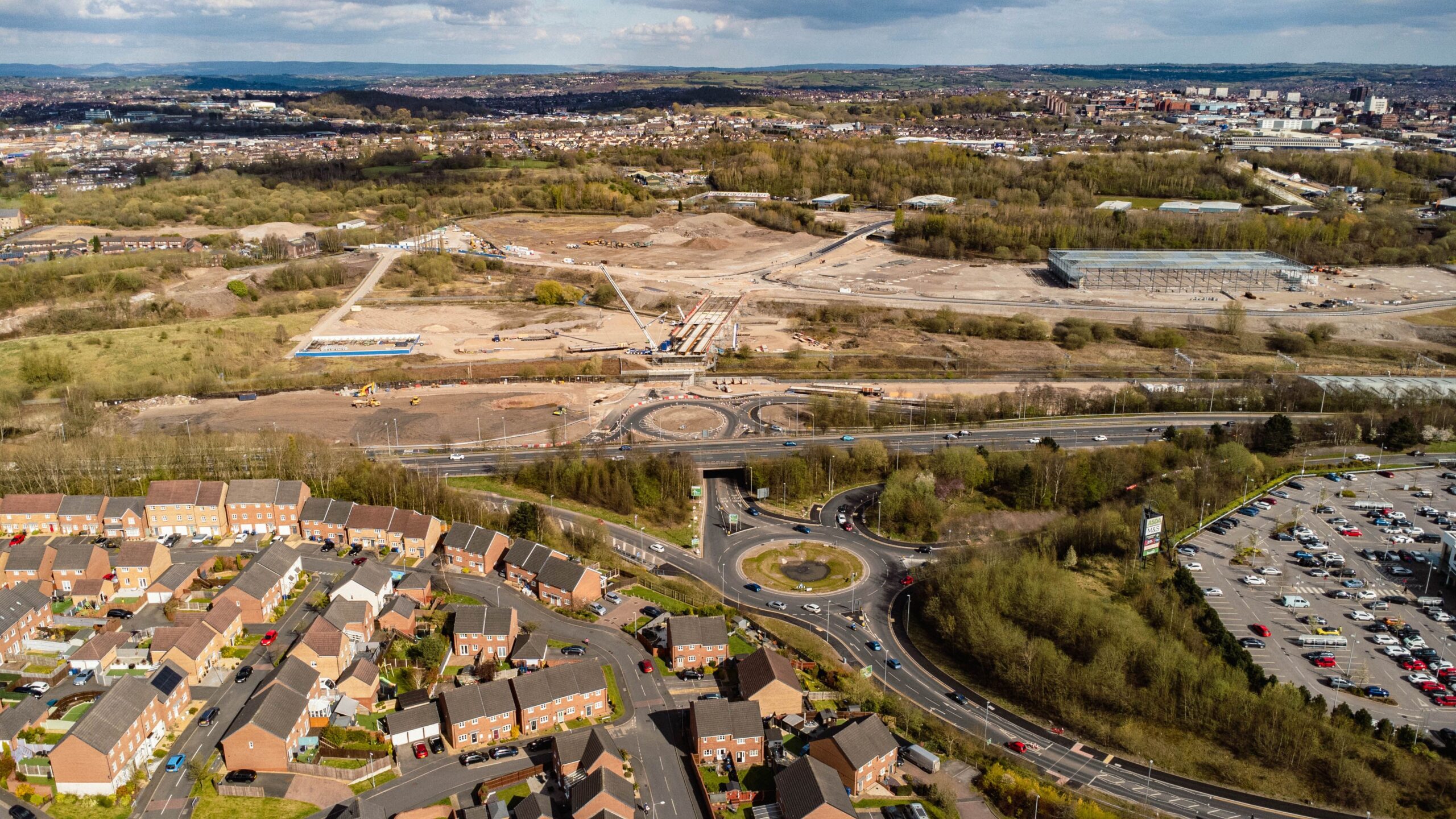
Brownfield Land Planning Permission UK: Rules, Process & Key Considerations
Brownfield land planning permission UK is an important consideration for developers, homeowners and investors looking to redevelop previously developed sites.
Brownfield land can provide opportunities for housing, commercial development, regeneration and other forms of development. However, being a brownfield site does not automatically mean that planning permission will be granted.
The planning position depends on the site’s location, previous use, proposed development, planning designation, environmental constraints, local planning policies and the evidence submitted with the application.
In England, national planning policy encourages the effective use of suitable brownfield land. The National Planning Policy Framework states that planning policies and decisions should make as much use as possible of previously developed or brownfield land.
This guide explains brownfield land planning permission UK rules, the Brownfield Land Register, Permission in Principle, contamination, planning applications and the key issues that can affect development proposals.
England focus: Planning is devolved across the UK. The Brownfield Land Register and Permission in Principle framework discussed in detail below applies to England, so planning rules in Wales, Scotland and Northern Ireland should be checked separately.
What Is Brownfield Land?
In planning terms, brownfield land is generally referred to as previously developed land.
The definition is more specific than simply describing land that has previously been used by people. Under the National Planning Policy Framework, previously developed land generally concerns land that is or was occupied by a permanent structure and associated developed land. The definition contains important exclusions and qualifications.
Examples can include:
-
Former industrial sites
-
Disused factories
-
Former warehouses
-
Previously developed commercial sites
-
Former transport-related sites
-
Previously developed employment land
-
Some vacant or derelict urban sites
However, not every previously occupied piece of land qualifies as brownfield land for planning purposes.
For example, residential gardens are excluded from the NPPF definition of previously developed land.
This distinction matters because a site’s planning history should be established before assuming that brownfield planning policies apply.
Does Brownfield Land Automatically Get Planning Permission?
No.
Being classified as brownfield land does not automatically give you planning permission to develop the site.
National planning policy supports the effective use of suitable brownfield land, but a planning application still needs to be assessed against the development plan and other material considerations.
The local planning authority may need to consider issues such as:
-
The proposed use
-
Scale and density
-
Design
-
Access and highways
-
Residential amenity
-
Flood risk
-
Drainage
-
Contamination
-
Ecology and biodiversity
-
Heritage
-
Landscape
-
Infrastructure
-
Local planning policies
-
Affordable housing and other planning obligations where applicable
The NPPF gives substantial weight to the value of using suitable brownfield land, but this does not remove the need to consider other planning requirements and constraints.
Why Is Brownfield Land Important for Development?
Brownfield redevelopment can support several planning objectives.
Making Better Use of Previously Developed Land
Developing suitable brownfield sites can help accommodate housing and other land uses without relying exclusively on undeveloped land.
The NPPF directs planning policies towards making effective use of land and making as much use as possible of suitable previously developed land.
Supporting Urban Regeneration
Redeveloping vacant or underused sites can contribute to the regeneration of existing urban areas.
Depending on the location and proposal, redevelopment may provide:
-
New homes
-
Employment space
-
Commercial uses
-
Community facilities
-
Improved public spaces
-
New infrastructure
Making Use of Existing Locations
Some brownfield sites are located within established settlements where roads, public transport, utilities and other services already exist.
However, existing infrastructure should not be assumed to be adequate. The capacity of roads, drainage, utilities and other infrastructure may still need to be assessed as part of the planning process.
Brownfield Land Planning Permission: What Rules Apply?
There is no single planning permission specifically called “brownfield planning permission”.
Instead, development on brownfield land is generally assessed through the normal planning system, together with national and local policies that support the appropriate reuse of previously developed land.
In England, the relevant framework can include:
-
The Town and Country Planning Act 1990
-
The National Planning Policy Framework
-
Planning Practice Guidance
-
The local development plan
-
Neighbourhood plans where relevant
-
Local supplementary planning documents
-
Site-specific planning policies
-
Environmental and other regulatory requirements
The NPPF is the government’s national planning policy framework for England.
The applicable local plan is particularly important because the planning authority must assess the proposal against the development plan unless material considerations indicate otherwise.
Brownfield Land Register: What Is It?
In England, local planning authorities maintain Brownfield Land Registers containing previously developed sites that are suitable for residential development.
The register is divided into two parts.
Part 1 Brownfield Land Register
Part 1 contains sites that meet the relevant criteria for inclusion on the register.
Being included in Part 1 does not automatically grant Permission in Principle.
Part 2 Brownfield Land Register
Part 2 contains sites where the local planning authority has decided that Permission in Principle should be granted for suitable housing-led development, following the required procedures.
This distinction is important.
A site appearing on a Brownfield Land Register does not automatically mean that it has planning permission.
What Is Permission in Principle?
Permission in Principle (PiP) is a planning route designed to establish whether the fundamental principles of development are acceptable before detailed design is considered.
For brownfield sites, the relevant process can involve a site being entered into Part 2 of a Brownfield Land Register, subject to the statutory requirements.
At the Permission in Principle stage, the key matters include:
-
Location
-
Land use
-
Amount of development
Detailed matters are considered later through Technical Details Consent.
Permission in Principle therefore does not mean that the developer can immediately start construction.
Technical Details Consent must still be obtained before development can proceed.
Permission in Principle vs Full Planning Permission
These routes should not be confused.
| Permission in Principle | Full planning permission |
|---|---|
| Establishes the fundamental principles of development | Determines the detailed development proposal |
| Considers matters such as location, use and amount | Considers detailed design, layout, access and other matters |
| Technical Details Consent is required before development proceeds | Permission normally establishes the permission needed for the approved development |
| Can be relevant to suitable brownfield sites | Available through the ordinary planning application system |
Government guidance confirms that Permission in Principle settles the fundamental principles of development, while Technical Details Consent deals with detailed matters.
Can You Build on Brownfield Land Without Planning Permission?
Not necessarily.
The fact that land is brownfield does not create a general exemption from planning permission.
Some forms of development may benefit from permitted development rights, depending on the type of development, existing use, location and applicable limitations and conditions.
Other proposals may require:
-
Full planning permission
-
Prior approval
-
Permission in Principle followed by Technical Details Consent
-
Listed building consent
-
Advertisement consent
-
Other specialist consents
The correct route depends on the development being proposed.
Before assuming that a brownfield site can be developed without permission, the site’s planning history and proposed use should be checked carefully.
How to Get Brownfield Land Planning Permission
The process will vary according to the proposal and location, but the following steps provide a practical starting point.
Step 1: Establish the Site’s Planning History
Before preparing an application, investigate:
-
Previous uses
-
Previous planning applications
-
Existing permissions
-
Previous refusals
-
Enforcement history
-
Existing lawful uses
-
Current planning designations
This can reveal opportunities and constraints that may not be obvious from a site inspection.
Step 2: Check Whether the Site Is on the Brownfield Land Register
For sites in England, check the relevant local authority’s Brownfield Land Register.
If the site is listed, determine whether it is included in Part 1 or Part 2.
Part 1 inclusion does not itself grant Permission in Principle. Part 2 is the relevant part where Permission in Principle may be granted through the register following the required procedures.
Step 3: Review the Local Development Plan
Check the policies that apply to the site.
Relevant policies may concern:
-
Housing
-
Employment
-
Design
-
Density
-
Heritage
-
Transport
-
Green Belt
-
Flood risk
-
Biodiversity
-
Open space
-
Affordable housing
-
Infrastructure
A brownfield designation does not override site-specific planning policies.
Step 4: Investigate Site Constraints
A proper site assessment should identify potential constraints before an application is submitted.
These may include:
-
Contamination
-
Flood risk
-
Drainage
-
Ecology
-
Protected species
-
Trees
-
Heritage assets
-
Archaeology
-
Highways
-
Rights of way
-
Ground conditions
-
Noise
-
Air quality
-
Landscape considerations
Early identification of constraints can prevent expensive redesigns later.
Step 5: Consider Pre-Application Advice
Pre-application discussions with the local planning authority can help identify key planning issues before a formal application is submitted.
The level of advice available varies between authorities and may be subject to a fee.
For complex brownfield schemes, early professional input can also help coordinate planning, design and technical investigations.
Step 6: Commission Appropriate Surveys
The required technical evidence depends on the site and proposal.
Potential assessments include:
-
Phase 1 contamination assessment
-
Phase 2 intrusive investigation
-
Flood Risk Assessment
-
Drainage assessment
-
Ecological assessment
-
Biodiversity information
-
Transport assessment
-
Arboricultural survey
-
Heritage assessment
-
Noise assessment
-
Air quality assessment
Not every brownfield application requires every assessment.
The correct evidence should be determined by the characteristics of the site and the proposed development.
Step 7: Prepare the Planning Application
The application should contain the drawings, forms, supporting statements and technical documents required for the particular development.
Depending on the proposal, this could include:
-
Site location plan
-
Block plan
-
Existing and proposed plans
-
Elevations
-
Design information
-
Planning statement
-
Design and Access Statement where required
-
Transport information
-
Flood risk information
-
Contamination information
-
Ecology and biodiversity information
-
Heritage assessment
Step 8: Submit the Application and Respond to Consultation
Once submitted, the local planning authority will validate and assess the application.
Consultation and publicity requirements depend on the application.
The authority may also consult relevant statutory bodies or other organisations.
Step 9: Deal With Planning Conditions and Obligations
If permission is granted, the development may be subject to conditions.
Some conditions may need to be discharged before development begins.
Depending on the scale and nature of the scheme, planning obligations under Section 106 or Community Infrastructure Levy requirements may also be relevant.
The exact obligations depend on the site, development and applicable local policies.
Brownfield Land and Contamination
Contamination is one of the most important issues to investigate when considering brownfield development.
Previous industrial, commercial or other uses may have left contaminants in:
-
Soil
-
Groundwater
-
Made ground
-
Existing structures
-
Underground tanks
-
Former industrial infrastructure
The potential risks depend on the site’s history and proposed future use.
Phase 1 Contamination Assessment
A Phase 1 assessment generally involves reviewing available information about the site’s history, geology, environmental setting and potential sources and pathways of contamination.
Phase 2 Investigation
Where the initial assessment identifies potential contamination requiring further investigation, intrusive investigations may be undertaken.
These can help establish:
-
What contaminants are present
-
Their concentrations
-
Their distribution
-
Potential risks
-
Appropriate remediation requirements
A Phase 1 or Phase 2 assessment is not automatically mandatory for every brownfield site. The level of investigation should be proportionate to the site’s history, risks and proposed use.
Brownfield Sites and Flood Risk
Brownfield does not mean that a site is free from flood risk.
A previously developed site may still be located within an area affected by:
-
River flooding
-
Surface water flooding
-
Groundwater flooding
-
Drainage constraints
Flood risk may therefore need to be assessed before development is proposed.
Where necessary, a Flood Risk Assessment and appropriate drainage strategy should be prepared.
Brownfield Land in Conservation Areas or Near Heritage Assets
Brownfield status does not remove heritage protections.
A previously developed site may be located:
-
Within a conservation area
-
Near a listed building
-
Within a historic landscape
-
Near a scheduled monument
-
In an archaeologically sensitive area
Heritage considerations can therefore affect the design, scale, materials and acceptability of a proposal.
Additional consent may also be required depending on the development.
Brownfield Land and Green Belt
A brownfield site can also be located within the Green Belt.
This is an important distinction.
Brownfield status does not automatically remove Green Belt policy considerations.
A proposal on previously developed land in the Green Belt may therefore need to address both the policies supporting brownfield redevelopment and the applicable Green Belt policies.
The site’s location and the precise nature of the proposal must be assessed before assuming that brownfield status makes development acceptable.
Residential Development on Brownfield Land
Residential schemes are a major reason for the policy focus on brownfield land.
Potential proposals include:
-
New housing estates
-
Flats and apartments
-
Mixed-use developments
-
Conversion of existing buildings
-
Redevelopment of former employment sites
-
Housing-led regeneration
However, residential development must still satisfy relevant planning requirements.
Key issues can include:
-
Housing mix
-
Density
-
Design
-
Residential amenity
-
Parking
-
Highways
-
Drainage
-
Biodiversity
-
Affordable housing
-
Open space
-
Infrastructure
-
Viability where relevant
Commercial Development on Brownfield Land
Brownfield sites are not limited to residential development.
Depending on the planning context, they may be suitable for:
-
Offices
-
Industrial premises
-
Warehouses
-
Retail
-
Leisure
-
Community uses
-
Mixed-use schemes
The applicable policies and planning considerations will depend on the proposed use and the site’s location.
Traffic, servicing, noise, environmental effects and the relationship with surrounding uses can be particularly important for commercial schemes.
What Can Prevent Brownfield Planning Permission?
A brownfield site may still face significant planning constraints.
Potential issues include:
-
Conflict with the development plan
-
Green Belt restrictions
-
Flood risk
-
Highway problems
-
Contamination
-
Heritage constraints
-
Ecology
-
Protected species
-
Poor access
-
Residential amenity impacts
-
Infrastructure capacity
-
Unsuitable design
-
Landscape impacts
-
Biodiversity requirements
This is why a site’s brownfield status should be viewed as a planning consideration and potential opportunity, not a guarantee of consent.
Common Mistakes When Applying for Brownfield Planning Permission
Assuming Brownfield Means Automatic Approval
This is perhaps the most significant misconception.
Brownfield status does not provide automatic planning permission.
Failing to Investigate Previous Uses
The site’s history can reveal contamination, previous planning conditions, enforcement issues or other constraints.
Treating Part 1 of the Brownfield Register as Planning Permission
Part 1 inclusion does not automatically grant Permission in Principle.
Ignoring Local Planning Policies
National support for brownfield development does not remove the need to assess the proposal against the relevant development plan.
Underestimating Contamination
Environmental investigations should be proportionate but should not be ignored simply because the site appears suitable for redevelopment.
Assuming Existing Infrastructure Is Sufficient
A brownfield site may be located in an established area but still have access, drainage, utilities or highway constraints.
Submitting an Application Before Understanding the Site
Early feasibility work can identify problems before significant design and application costs are incurred.
Frequently Asked Questions About Brownfield Land Planning Permission UK
Do I need planning permission to develop brownfield land?
Usually, yes, where the proposed development constitutes development requiring planning permission. Brownfield status does not create a general exemption. However, some proposals may benefit from permitted development rights or other planning routes depending on the circumstances.
Does brownfield land have an automatic presumption in favour of development?
No. National planning policy supports the effective use of suitable brownfield land, but proposals still need to be assessed against the development plan and other material considerations.
Can I build houses on brownfield land?
Potentially, but planning permission or another appropriate planning route will normally be required. The site’s location, planning designation, development plan policies and the details of the proposed housing scheme will all be relevant.
What is the Brownfield Land Register?
It is a register maintained by local planning authorities in England identifying previously developed sites that are suitable for residential development. It has two parts, and inclusion on Part 1 does not itself grant Permission in Principle.
Does being on the Brownfield Land Register mean I have planning permission?
No. A site being listed on Part 1 does not automatically grant Permission in Principle. Part 2 is the relevant part for sites where Permission in Principle is granted through the Brownfield Land Register process.
What is Permission in Principle?
Permission in Principle is a planning route that establishes the fundamental principles of development, including matters such as location, land use and amount of development. Technical Details Consent is then required before development can proceed.
Does Permission in Principle mean I can start building?
No. Permission in Principle does not by itself allow development to begin. Technical Details Consent must also be obtained where required.
Do all brownfield sites need contamination surveys?
Not necessarily. The need for contamination assessment depends on the site’s previous use, environmental setting, proposed development and potential risks. However, contamination should be investigated where there is a reasonable possibility of contamination.
Can brownfield land be in the Green Belt?
Yes. Brownfield status and Green Belt status are separate planning considerations. A previously developed site can be subject to Green Belt policies.
Can brownfield land be developed for commercial use?
Potentially. Brownfield sites can be considered for different forms of development, including commercial and mixed-use schemes, subject to the applicable planning policies and constraints.
Does brownfield development avoid Section 106 obligations?
No. Planning obligations can still apply to a brownfield development where the relevant legal and policy tests are met. The obligations will depend on the development and local planning requirements.
Conclusion: Brownfield Land Planning Permission UK
Obtaining brownfield land planning permission UK can provide an opportunity to regenerate previously developed sites and make more effective use of land.
However, brownfield status does not guarantee planning permission.
Before proceeding, developers and landowners should establish the site’s planning history, check the relevant local planning policies, investigate environmental and physical constraints and determine the most appropriate planning route.
For sites in England, the Brownfield Land Register and Permission in Principle can provide an additional route for suitable housing-led development, but inclusion on the register and Permission in Principle should not be confused with full planning permission. Technical Details Consent may still be required.
A carefully prepared planning strategy can help identify constraints early, select the appropriate planning route and ensure that the supporting evidence addresses the issues most likely to affect the proposal.
Need Advice on Brownfield Land Planning Permission?
If you are considering developing a brownfield site, obtaining planning permission or assessing the potential of previously developed land, Charrette Law can advise on the planning and legal issues relevant to your proposal.
Contact Charrette Law to discuss your brownfield development and planning requirements.