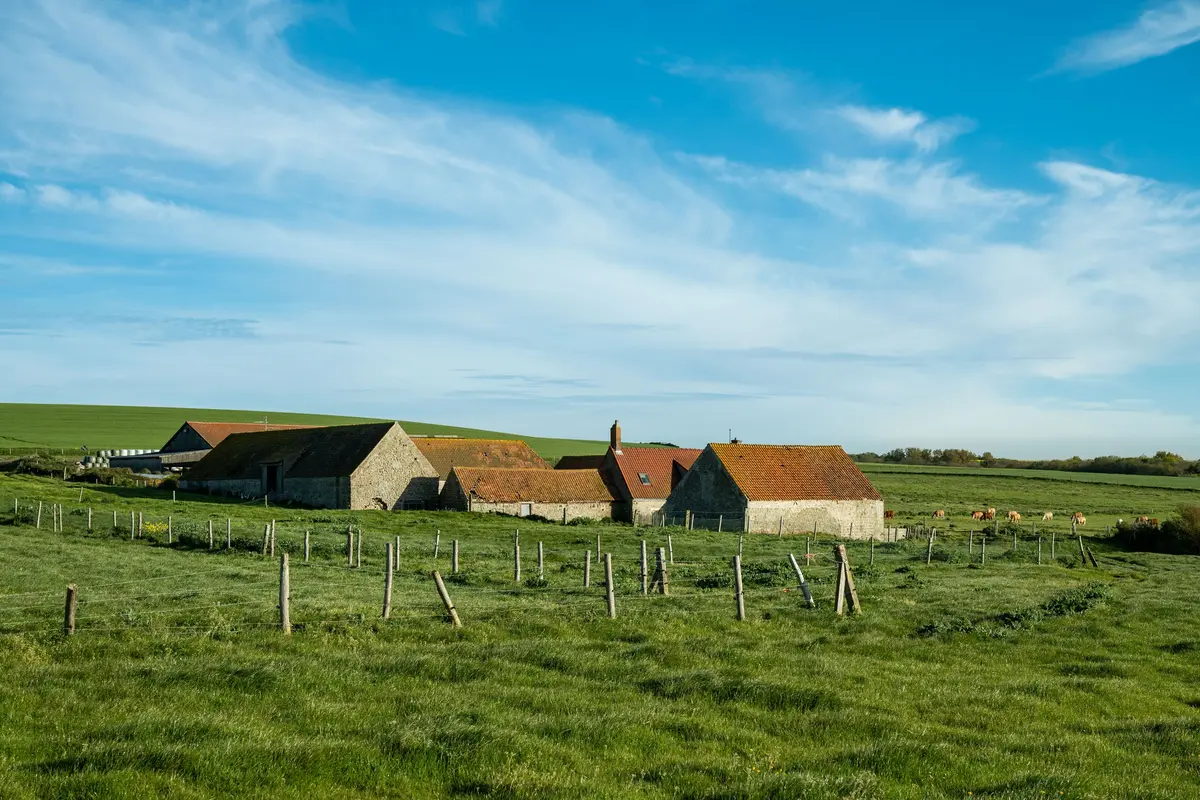
Converting an agricultural barn into a residential property can be an attractive way to create a new home while making use of an existing rural building. However, planning permission for barn conversion in the UK can be complex, particularly where the conversion involves agricultural buildings, rural planning policies, Green Belt land, heritage assets or significant structural alterations.
In some circumstances, a barn conversion may qualify for Permitted Development rights under Class Q, allowing certain agricultural buildings to be converted into homes without submitting a full planning application. However, strict conditions and limitations apply, and not every barn will qualify.
If you are considering a barn conversion, establishing the planning position before purchasing the property or beginning works can help you avoid costly mistakes and determine the most appropriate route for your project.
Do You Need Planning Permission for a Barn Conversion?
Whether you need planning permission for a barn conversion depends on the circumstances of the building, its previous and current use, the proposed residential use, its location and whether it qualifies for Permitted Development rights.
There are generally two potential routes:
- Conversion under Permitted Development rights, where the proposal satisfies the relevant requirements, particularly Class Q; or
- A full planning application where Class Q does not apply or the proposed development falls outside its limitations.
The distinction is important because a barn conversion that appears straightforward may still be subject to planning restrictions.
Can You Convert Any Barn into a House?
No. Not every agricultural barn can be converted into a dwelling under Permitted Development rights.
The building and proposed works must satisfy the applicable legislation and limitations. If they do not, a full planning application may be necessary.
Before committing to a conversion project, it is therefore advisable to establish whether the building qualifies and what planning route is available.
What Is Class Q Permitted Development?
Class Q is a form of Permitted Development that allows certain agricultural buildings to be converted into residential dwellings, subject to specified conditions and limitations.
It can provide a potentially faster and more straightforward route to residential conversion than a full planning application. However, Class Q is not a blanket right to convert agricultural buildings.
What Does Class Q Cover?
Class Q can allow eligible agricultural buildings to be converted into homes, subject to the applicable limitations.
The rules cover matters including:
- The previous agricultural use of the building
- The size and number of proposed dwellinghouses
- The extent and nature of building operations
- The location of the building
- The date and history of the agricultural use
- The design and external appearance
- Transport and access considerations
- Other conditions and limitations applying to the development
Because the requirements are detailed, a Class Q assessment should be carried out before relying on Permitted Development rights.
What Are the Class Q Barn Conversion Requirements?
A barn conversion under Class Q must satisfy the relevant criteria. These can include requirements relating to the building’s agricultural use and the extent of the proposed conversion works.
Previous Agricultural Use
One of the key considerations is whether the building has been used for an agricultural purpose in accordance with the requirements of the relevant legislation.
The history of the building and its use should therefore be investigated before an application or prior approval submission is made.
Building Operations
Class Q does not permit unlimited reconstruction or rebuilding.
The works must fall within the scope of the building operations permitted by the legislation. If the proposal involves substantial rebuilding or creates what is effectively a new building, Class Q may not be available.
Number and Size of Dwellings
There are restrictions on the number and size of homes that can be created under Class Q.
The exact limits depend on the applicable provisions and the circumstances of the existing agricultural building.
A professional assessment can help establish how much residential floor space may be achievable.
What Is Class Q Prior Approval?
Although Class Q is a Permitted Development right, qualifying projects generally require an application for prior approval from the local planning authority.
Prior approval is different from a standard planning application.
The local planning authority considers specific matters identified by the legislation rather than assessing the proposal in exactly the same way as a full planning application.
What Does the Local Planning Authority Consider?
Depending on the proposal and applicable regulations, the authority may consider matters such as:
- Transport and highways impacts
- Noise impacts
- Contamination risks
- Flooding risks
- Location and siting
- Design and external appearance
- Natural light
- The sustainability of the proposed location
- Other specified prior approval matters
The precise matters depend on the relevant Class Q provisions and the nature of the proposal.
When Is Full Planning Permission Required for a Barn Conversion?
A full planning application may be required where a barn conversion does not qualify for Class Q or where the proposed development falls outside the applicable Permitted Development rights.
This could occur where:
- The building does not meet the relevant agricultural use requirements
- The proposed works go beyond what Class Q permits
- The building is substantially rebuilt
- The proposed use is outside the scope of Class Q
- The property is subject to restrictions affecting Permitted Development
- The proposal involves development requiring express planning permission
- The conversion does not satisfy the relevant conditions and limitations
A full planning application may also provide a route for more ambitious barn conversion schemes that cannot be delivered through Class Q.
Barn Conversion Planning Permission in the Green Belt
Barn conversions in the Green Belt require particular care.
Green Belt planning policy places strong restrictions on inappropriate development. However, the conversion of buildings in certain circumstances may be treated differently from constructing a completely new building.
The planning position will depend on the nature of the proposal, the existing building and the applicable national and local planning policies.
Can You Convert a Barn in the Green Belt?
It may be possible to convert a barn in the Green Belt, but the development must satisfy the relevant planning requirements.
Where Class Q is unavailable, a full planning application will need to be assessed against the applicable Green Belt policies as well as other material planning considerations.
Specialist planning advice can be particularly valuable before purchasing a barn or investing in architectural drawings.
Barn Conversion Planning Permission in Conservation Areas
Additional considerations may apply where a barn is located within a conservation area.
The local planning authority may consider the effect of the proposal on the character and appearance of the conservation area.
Restrictions on Permitted Development may also apply depending on the circumstances.
Listed Barns and Heritage Assets
If the barn is a listed building, or the proposal could affect a listed building or another heritage asset, additional heritage considerations may arise.
Listed Building Consent may be required for works affecting the special architectural or historic interest of a listed building.
A Heritage Statement or other heritage assessment may also be required to support the planning proposal.
What Planning Issues Are Considered in a Barn Conversion?
Whether you are pursuing Class Q prior approval or a full planning application, several planning considerations can affect the success of a barn conversion.
Access and Highways
The local planning authority may consider whether the existing access is suitable for the proposed residential use.
Issues may include:
- Visibility
- Road safety
- Parking
- Traffic generation
- Access arrangements
- Changes required to existing entrances
Design and Appearance
The design of a barn conversion should generally respond appropriately to the character of the existing building and its surroundings.
Considerations can include:
- External materials
- Windows and doors
- Roof alterations
- Extensions
- Openings
- Landscaping
- The relationship with surrounding buildings
Natural Light
The availability of natural light can be an important consideration, particularly where an agricultural building is being converted into residential accommodation.
The design of windows, rooflights and internal spaces may therefore need careful consideration.
Flood Risk and Drainage
Where a barn is located in an area affected by flood risk, the proposal may require additional assessment.
Drainage, surface water and the suitability of the site for residential use may also need to be addressed.
Ecology and Protected Species
Older agricultural buildings can provide habitats for protected species, including bats and nesting birds.
An ecological survey may therefore be required before conversion works begin.
How to Apply for Planning Permission for a Barn Conversion
If your project requires full planning permission, you will need to submit an application to the relevant local planning authority.
A typical application may require:
- Planning application forms
- Site location plan
- Existing and proposed site plans
- Existing and proposed floor plans
- Elevation drawings
- Design and access information where applicable
- Planning statement
- Heritage statement where relevant
- Ecological information where required
- Other supporting assessments
The precise documents required will depend on the location, building and nature of the proposal.
Pre-Application Planning Advice
Obtaining pre-application advice can help identify potential planning issues before a full application is submitted.
This can be particularly useful for barn conversions because planning constraints can vary significantly between sites.
A pre-application assessment may help you understand:
- Whether residential conversion is likely to be acceptable
- Whether Class Q may be available
- What supporting documents may be required
- Potential objections
- Relevant local planning policies
- Heritage or ecological constraints
- Access and highways issues
Why Get Professional Barn Conversion Planning Advice?
Barn conversions can involve several areas of planning law and policy. An early assessment can help establish whether your proposed conversion is realistically achievable and which planning route is most appropriate.
Professional planning advice can help you:
- Assess Class Q eligibility
- Identify planning constraints
- Review the planning history of the property
- Determine whether full planning permission is required
- Assess Green Belt considerations
- Identify heritage issues
- Advise on supporting documents
- Develop a planning strategy
- Prepare or support a planning application
- Respond to planning concerns or objections
Obtaining advice before purchasing a property can also help you understand its development potential and avoid relying on assumptions about what can be converted.
Barn Conversion Planning Permission: Frequently Asked Questions
Do I need planning permission to convert an agricultural barn into a house?
You may not need a full planning application if the conversion qualifies under Class Q Permitted Development rights. However, Class Q has specific conditions and limitations, and a prior approval application is generally required.
What is Class Q for barn conversions?
Class Q is a Permitted Development right that allows certain agricultural buildings to be converted into residential dwellings, subject to specified conditions and limitations.
Does Class Q mean I do not need to contact the council?
No. Class Q development generally requires a prior approval application to the local planning authority. The authority will assess the matters specified by the relevant legislation.
Can I convert a barn that is no longer used for agriculture?
Potentially, but the history and timing of the building’s agricultural use are important when assessing whether Class Q applies. The precise circumstances should be checked against the current legislation.
Can I extend a barn under Class Q?
Class Q permits certain building operations, but it does not provide unlimited rights to extend or rebuild an agricultural building. The proposed works must fall within the relevant limitations.
Can I convert a barn in the Green Belt?
A barn in the Green Belt may potentially be converted, but the planning route and relevant restrictions depend on the circumstances. If Class Q does not apply, a full planning application will need to address Green Belt and other planning policies.
Can a listed barn be converted into a house?
It may be possible, but additional heritage controls can apply. If the barn is listed, Listed Building Consent may be required for works affecting its special architectural or historic interest.
Do I need an ecological survey for a barn conversion?
Potentially. Older barns can provide habitats for protected species such as bats and birds. The local planning authority may require ecological information where there is a reasonable likelihood of protected species being affected.
Can I turn a barn into two or more houses?
Potentially, subject to the applicable planning route and restrictions. Class Q has limitations concerning the number and size of dwellings that can be created. A larger scheme may require full planning permission.
Can I live in a barn while applying for planning permission?
You should not assume that an agricultural barn can lawfully be used as a residence simply because a conversion application has been submitted. The lawful use of the building should be established before residential occupation.
What happens if my barn conversion application is refused?
If a planning application is refused, there may be options to revise the proposal, address the reasons for refusal and submit a new application or, where appropriate, appeal the decision.
How can I find out if my barn is suitable for conversion?
A professional planning assessment can review the building’s planning history, agricultural use, location, permitted development rights, design constraints and relevant planning policies to determine the most appropriate route.
Get Expert Advice on Planning Permission for Barn Conversions
A barn conversion can provide an exciting opportunity to create a new home from an existing agricultural building, but the planning position should be established before you commit to the project.
Whether you are considering a Class Q barn conversion, a conversion requiring full planning permission, or a proposal involving Green Belt, conservation area or heritage considerations, early professional advice can help you understand the opportunities and constraints.
At Charrette Law, our planning and legal team can assist property owners and developers with planning strategy, Permitted Development, Class Q, planning applications and complex planning issues affecting barn conversions.
From assessing the planning potential of an agricultural building to preparing a strategy for obtaining the necessary consent, we can help you approach your project with greater clarity and confidence.
Contact Charrette Law today to discuss your barn conversion project and get expert advice on planning permission and the most appropriate route for your development.