
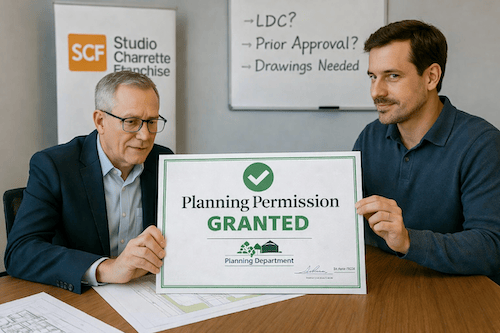
Before carrying out any building works or change of use, it is critical to establish whether planning permission or building regulations approval is required.
Many planning disputes, enforcement actions, and project delays arise from incorrect assumptions made at the outset. A legally informed assessment of feasibility and compliance should therefore be the first step in any development project.
Establishing Planning Feasibility
A proper planning review considers:
- Whether the proposed development is acceptable in principle
- Whether planning permission is required or Permitted Development rights apply
- The correct type of planning application, if needed
- The likely timescales involved
- The probability of success based on planning policy and site constraints
- The potential cost exposure and risk
Permitted Development and Legal Constraints
Certain developments may proceed under Permitted Development (PD) rights, provided all statutory criteria are met. However, these rights are frequently removed or restricted by:
- Article 4 Directions
- Planning conditions attached to earlier permissions
- Conservation area or listed building status
- Enforcement history or restrictive site designations
Where PD rights do not apply, unauthorised development can expose property owners to enforcement action, retrospective applications, or refusal risks.
Planning Appraisals by RTPI-Certified Consultants
Charrette Law works alongside RTPI-certified planning consultants to provide a structured planning appraisal, offering legally grounded advice on:
- Development feasibility
- Planning risk and compliance
- The most appropriate planning route
- The likelihood of securing consent
While planning outcomes can never be guaranteed—only the local planning authority can make a formal legal determination—a planning appraisal provides clear, defensible advice to support informed decision-making before costs escalate.
Next Steps and Cost Transparency
Where a planning appraisal indicates a viable route forward, we can advise on the next stages and arrange support for:
- Architectural design
- Planning applications and appeals
- Building regulations approval
- Project delivery through to construction
For an early indication of professional fees, you may also use the Studio Charrette Planning Cost Calculator, which provides cost guidance based on project type and complexity.
Common Development Types We Advise On
Our planning and legal advisory services cover a wide range of residential and mixed-use developments, including:
- Basements
- Change of use
- Conservatories
- Conversions to flats
- Driveways and access arrangements
- Extensions
- Garage conversions
- Hardstanding Houses in Multiple Occupation (HMOs)
- Loft conversions
- New-build houses and flats
- Outbuildings
- Porches
- Walls, fences, and gates
Types of Planning Applications
We regularly advise on and support:
- Lawful Development Certificates
- Householder planning applications
- Full planning permission
- Outline planning permission
- Prior approval applications
- Retrospective planning applications
- Planning appeals
- Enforcement appeals
- Listed building consent
- Advertisement consent
Additional Planning Considerations
Planning outcomes may also be affected by:
- Planning conditions and obligations
- Objections from neighbours or statutory consultees
- Variations to approved schemes
Speak to a Planning & Legal Advisor
If you require advice on whether planning permission is required, or wish to arrange a planning appraisal, contact Charrette Law and a member of our team will respond promptly.